Why Trucking Rates Are Rising Without More Freight
Truckload rates rose in 2026 on flat freight. SONAR data and ATRI's 2026 cost study show carriers still earn too little to cover costs. See why rates must keep rising. The post Why Trucking Rates Are Rising Without More Freight appeared first on FreightWaves .
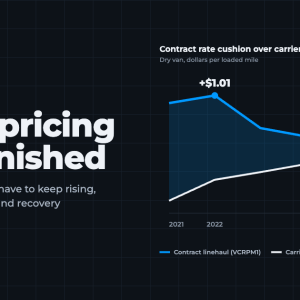
Trucking rates are rising in 2026 due to a lack of trucks on the market, not because of an increase in freight demand. Truckers spent three years hauling loads at rates that barely covered their costs, resulting in a correction in 2026 rates. According to SONAR's Sitrep "The Repricing Isn't Finished," the increase is only about halfway done.
Operating a truck in 2026 costs an average of $2.336 per mile, up 3.4% from 2024, with fuel costs rising 4.2%, outpacing inflation by 1.5 points. Costs for tolls, repair and maintenance, driver benefits, and tires also set new records. Insurance and fuel costs are expected to rise next. Rates fell behind costs in 2022 and 2024, with truckload contract lines clearing non-fuel costs by less than $1 per mile by 2025.
Spot linehaul rates were below non-fuel costs from 2023 to 2025. Despite demand being flat, rates are rising because capacity is leaving the market faster than freight. Tender rejection rates have nearly quadrupled since late 2023, while tender volume has only increased modestly. Conducting a truck requires about 14% more revenue than at benchmark rates, and even running near the hours-of-service limit, the truck still falls short of covering overhead costs.
The full Sitrep provides a mode-by-mode breakdown, market-level rejection data, and a Chicago-to-Atlanta lane analysis, with projections into 2027.
Written by urgent.news from FreightWaves's reporting — not their text. Machine-written — may contain errors; check the original before relying on it.