Why have EU sanctions missed the company behind Russia’s tank industry?
With more than four years of full-scale war and 12 years since Russia first invaded Ukraine, it seems the European Union has developed an extensive arsenal of tools to sanction Moscow, but one problem appears to persist: the visibility problem. Consider two companies that share a name. The first is Research and Production Corporation Uralvagonzavod in Nizhny Tagil, Russia's only tank…
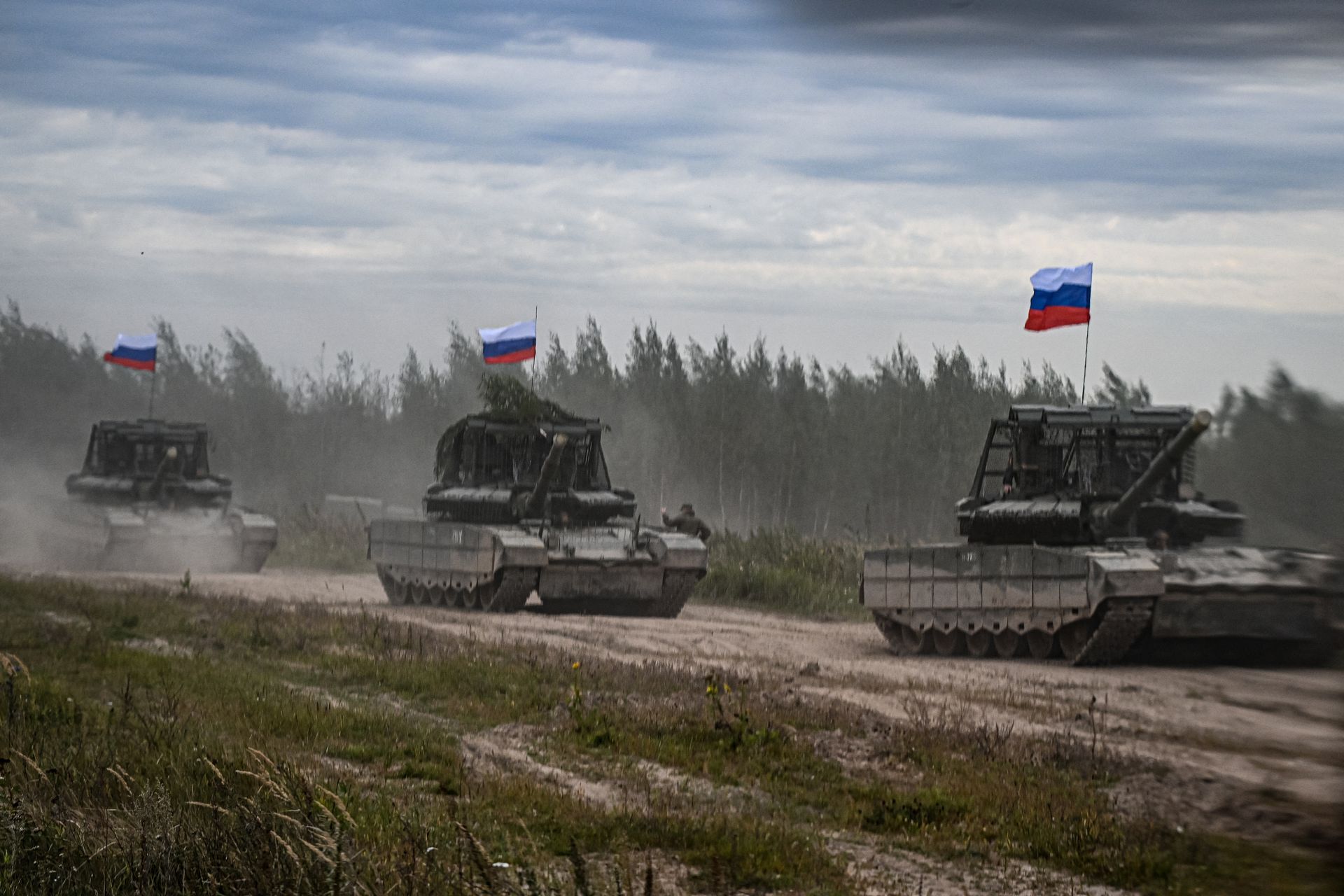
The European Union has implemented extensive sanctions against Russia, but one persistent issue remains: the visibility problem. Two companies with the same name, Research and Production Corporation Uralvagonzavod, are involved in this situation. The first is under EU sanctions since March 2022 for supplying T-72B3 tanks to Ukraine.
Its owner, Rostec, Russia's state defense conglomerate, is also named in the sanctions. The second company, Moscow-registered Concern Uralvagonzavod, is the plant's sole executive body. Aleksandr Potapov, its chief executive, is on the EU sanctions list. However, unlike the first company, Concern Uralvagonzavod is not listed on any EU sanctions list.
The sanctions regime aims to constrain Russia's war efforts, but it seems to be moving at a slow pace. It is estimated that the gap between the sanctions and the desired impact would close by 2030. This is a problem because the EU sanctions not only freeze a company's assets in the EU but also prevent EU entities from providing funds, supplies, or contracts to the sanctioned company.
The EU sanctions cover ownership or control of a listed person, but it is unclear if they extend to the company that runs a sanctioned factory. The EU sanctions on Rostec, the company behind Uralvagonzavod, do not include the Concern itself. However, Rostec's subsidiaries, including Uralvagonzavod, may be subject to the EU sanctions, but this cannot be verified due to lack of information.
The stakes are not limited to one tank maker. Ukraine's military intelligence service maintains a structure map of 553 entities affiliated with Rostec. Of those, 145 (26%) are subject to EU restrictive measures. Seven of Rostec's top-level holding companies are individually sanctioned. This gap between the sanctions and their expected impact is a concern for the EU, as it needs to be more transparent and visible in its sanctions regime.
Written by urgent.news from Kyiv Independent's reporting — not their text. Machine-written — may contain errors; check the original before relying on it.