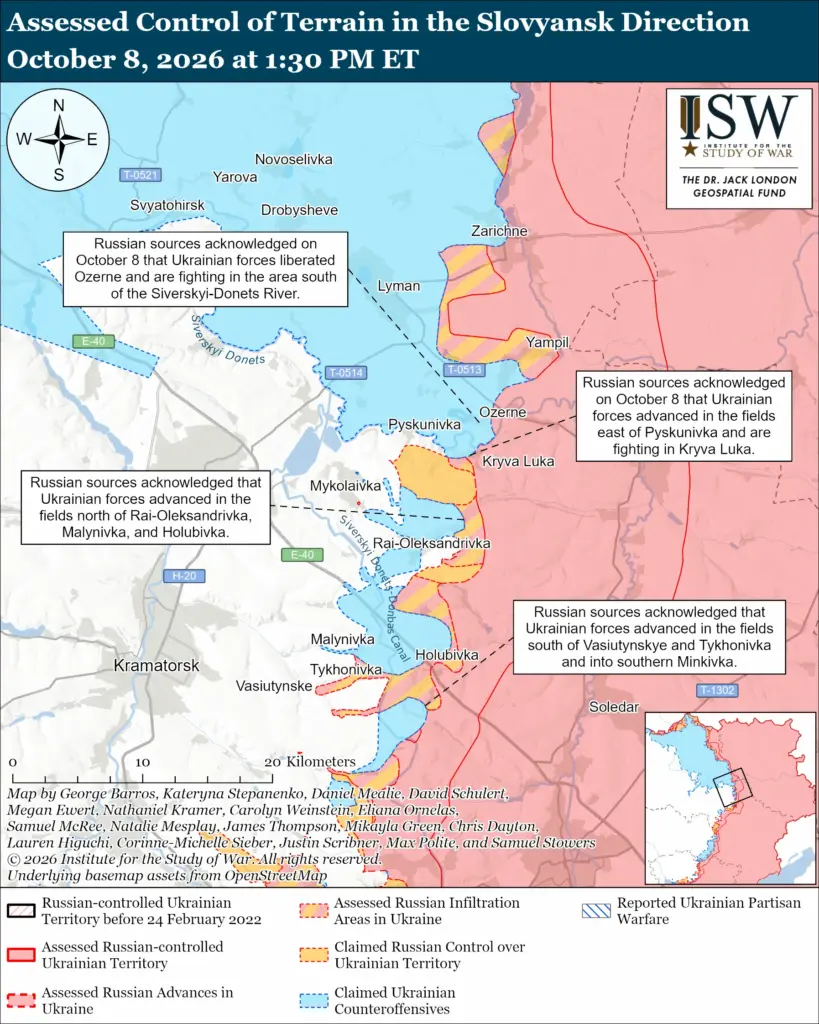
Ukraine reruns its Vivaldi playbook outside Kramatorsk and pushes Russia back across the Siverskyi Donets, ISW says
Even Russian milbloggers now concede Ukrainian gains east of Sloviansk, including a river crossing toward a key height.
In eastern and central Ukraine, major cities are adapting to the daily threat of Russian air attacks. Constant sirens and strikes have disrupted life across Kyiv, Odesa, Dnipro, Zaporizhzhia, and Kharkiv. The cities have developed strategies to maintain essential services while protecting citizens.
In Kharkiv, near the front line, air raid sirens sound about 10 times per day, on average. Despite the frequent alerts, factories remain operational, and entrepreneurs register new businesses. Shopping malls continue to operate during alerts, though some stores close. Restaurants and other establishments close between 8 and 10 p.m., and stores between 9 and 10 p.m. Children attend classes in underground schools or online.
Hospitals have shelters with backup power, and some are constructing underground hospitals. The healthcare system is strained, and surgeons often postpone surgeries.
Kharkiv's transportation system keeps running, even during alerts. Public transportation operates at reduced frequency, and stores offer free rides, though services become less frequent. Residents have become accustomed to ignoring alerts, as long as the attack is not too close. Public transportation in Zaporizhzhia has been targeted by anti-drone netting.
Despite the attacks, cultural events continue in the city, and well-known musicians and comedians perform. Movie theaters, theaters, and concert halls remain open, drawing sizable crowds.
In Dnipro, air raid alerts have increased five times compared to the previous year in September 2026. Shopping malls close when there is a threat, while others base their decisions on the threat level. Shoppers often ignore alerts and wait by the entrance for the mall to reopen. Small businesses are more likely to close their doors during drone threats.
Some stores reopen almost immediately after being hit, as long as they can serve customers on the premises. Schools in Dnipro combine in-person and remote learning, and many schools have underground shelters. Despite the constant attacks, the city has not experienced a large-scale exodus due to the high costs of moving and fear of losing jobs. Instead, Dnipro has become a hub for displaced people from areas near the front line.
Written by urgent.news from Meduza (English)'s reporting — not their text. Machine-written — may contain errors; check the original before relying on it.
This story
This is one outlet's version. Read the fullest account.
- Warehouses, a home-improvement store, a farm: Russia’s strikes aimed past the grid at Ukraine’s civilian economy euromaidanpress.com
- Russian attacks kill at least 41, injure 67 across Ukraine as glide bombs strike Zaporizhzhia kyivindependent.com
- Ukrainian drone attacks injure nine in Russia’s Kaluga region and spark fire at chemical plant in Tver region meduza.io
- Ukraine strike kills two in Russia's Belgorod, TASS says brecorder.com
- Latest attacks on Ukraine are ‘war crimes done by Putin’, says Ukrainian politician euronews.com
- Poland scrambles military aircraft as Russia launches overnight drone attack on Western Ukraine english.nv.ua