Truman Lowe Listens to the Water
In his first major retrospective, the Hoocąk artist transforms natural materials into fluid sculptures that carry the memory of place, ancestry, and cultural survival.
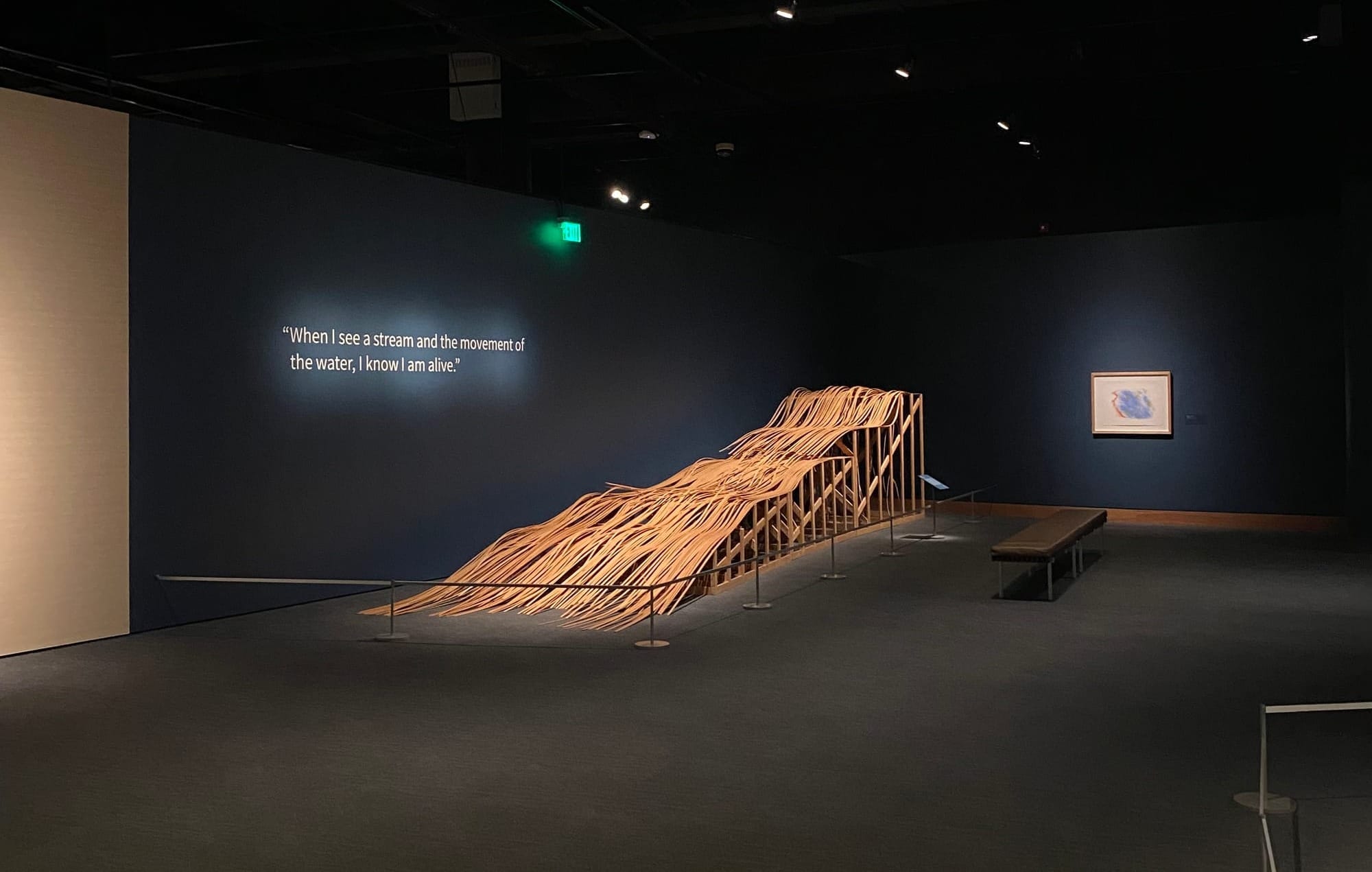
Washington, DC — The first major retrospective of Hoocąk (Ho-Chunk) artist Truman Lowe opens with the sculpture "Ottawa" (1992), a striking display of pine and peeled willow branches. This piece showcases the artist's deep connection to the rivers of his childhood, as it defies the natural rigidity of wood through its fluid, undulating form.
Throughout his exhibition at the National Museum of the American Indian, "Water's Edge: The Art of Truman Lowe", Lowe embodies Toni Morrison's belief that "all water has a perfect memory and is forever trying to get back to where it was." The exhibition delves into four themes of flowing water: Landscape and Place, Woodland Structures, Memory, and Shared Knowledge.
In Hoocąk culture, the number four is considered sacred, symbolizing history and the notion that repetition ensures permanence. This reverence for the number four is evident in numerous works by Lowe, such as "Mimi" (1979), which features four peeled willow branches, four clusters of blue jay feathers, and clusters of red beads in sequences of four enveloping four strips of leather. Another notable piece is "Wána (Cascade)" (2002), crafted from aluminum.
Written by urgent.news from Hyperallergic's reporting — not their text. Machine-written — may contain errors; check the original before relying on it.