Standard Chartered CEO calls for AI guardrails, says human judgment remains key to jobs
In an exclusive interview with CNA’s Julie Yoo, Mr Bill Winters also discusses the contrasting fortunes across China's economy and the impact of the Middle East conflict on Gulf nations.
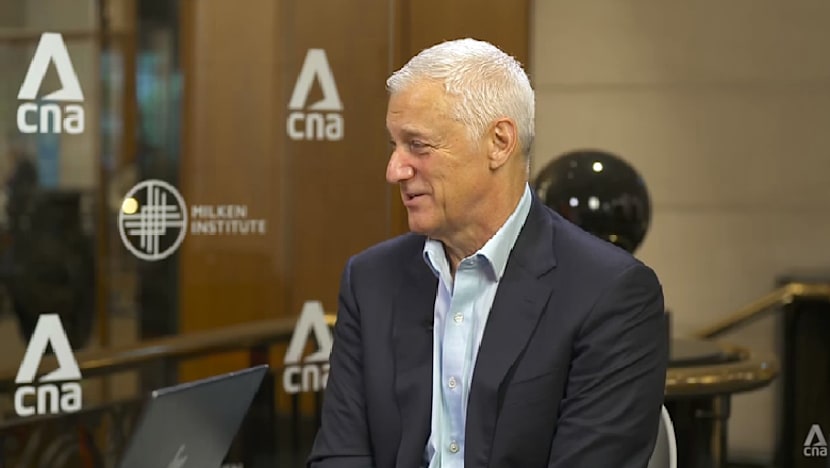
Standard Chartered Group CEO Bill Winters emphasized the need for stronger regulation and international cooperation to manage the risks posed by artificial intelligence (AI) during an interview with CNA’s Julie Yoo. Speaking at the Milken Institute Asia Summit, Winters discussed the opportunities AI presents for businesses, alongside concerns over cybersecurity and its impact on jobs.
He called for greater regulation of the AI industry, noting that it currently lacks adequate safeguards compared to traditional industries like pharmaceuticals. Winters acknowledged that tech companies aim to develop AI responsibly but highlighted the geopolitical competition between the United States and China, which both countries see as critical to dominating the technology.
He stressed that AI's risks are unlikely to disappear, with some bad outcomes inevitable, but warned that cybercriminals could exploit AI to breach security systems. Standard Chartered already employs AI to enhance customer experiences and improve operational efficiency, but also warned of the potential for cyberattacks. Winters said automation would change job roles at Standard Chartered, even if the bank's overall headcount increased.
He highlighted that about 85% of employees displaced by automation had been reskilled for other positions and would continue investing in employee reskilling as AI becomes more prevalent. He also noted that roles requiring human judgment or interaction, such as in wealth management, would remain important. Winters discussed contrasting fortunes across China's economy, noting that sectors like green technology, electric vehicles, batteries, and advanced electronics were seeing rapid development, while the property sector has not recovered.
Despite the property sector's struggles, he expressed confidence in China's economic outlook, citing fiscal and monetary policy tools available to support growth. However, rising interest rates and persistent inflation due to factors like energy and food price increases, and supply-chain disruptions, including those from the Middle East conflict, were keeping inflation elevated.
Winters acknowledged the impact of the conflict on Gulf economies, particularly Qatar and Saudi Arabia, but noted their resilience in the face of disruption.
Written by urgent.news from Channel News Asia's reporting — not their text. Machine-written — may contain errors; check the original before relying on it.
This story
This is one outlet's version. Read the fullest account.