Shares slip as oil jumps and bond yields stay high
BOSTON/LONDON/SYDNEY: Global shares slid on Thursday as a mild pullback in sovereign bond yields was countered by a jump in oil prices and indicators of the massive debt that technology companies may need to sustain their dramatic artificial intelligence-fueled growth.
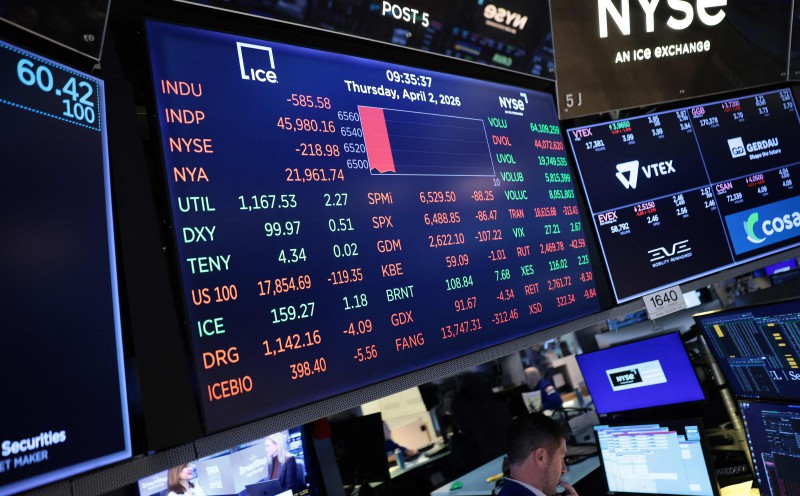
Global shares dipped on Thursday due to a combination of factors: a slight decline in sovereign bond yields, a surge in oil prices, and concerns about the debt burden of technology companies as they chase artificial intelligence growth. Wall Street's main indexes experienced a decline, with the S&P 500 sliding about 0.5% and the Nasdaq dropping nearly 1.3%. Chipmakers, which had surged over 80% this year, underperformed as OpenAI disclosed revenues that were significantly lower than initially reported.
Euro zone borrowing costs rose on Thursday amid heightened inflation concerns stemming from the oil price hike, although investors softened their pressure on heavily indebted nations like France and Italy. The yield on benchmark US 10-year notes eased slightly from its high levels, falling 5 basis points to 5.227%. Market observers noted that investors continued to value long-term government debt, despite the ongoing sell-off.
Experts suggested that the market might find solace in monetary intervention, specifically from the European Central Bank, which could help alleviate market tensions. European indices followed a similar downward trend, with the pan-European STOXX 600 falling 0.75% and the CAC-40 dropping 0.5%, nearing its annual lows seen in March. In Asia, Japan's Nikkei fell 1.4%, while South Korea's KOSPI slid 2.6%, reflecting broader market instability.
Oil prices rose by 4% to settle at $104.28 per barrel, driven by worries about the Middle East conflict and potential supply disruptions due to an approaching hurricane along the US Gulf Coast. As Wall Street prepares for the quarterly earnings season, optimism surrounding strong financial results has propelled US stocks higher, even amid geopolitical uncertainties and fears of rising interest rates.
The tech and energy sectors are anticipated to lead the earnings growth, with the S&P 500 expected to deliver a robust 30.6% increase in quarterly earnings, according to LSEG data.
Analysts have highlighted that the S&P 500's annual return of around 15% may seem modest, yet the index's forward price-to-earnings (P/E) ratio has declined from approximately 22x to 19x, primarily due to strong earnings growth. Despite a third of S&P 500 stocks underperforming, the market remains near all-time highs. Debt continues to pose a significant challenge, with reports suggesting that companies such as SpaceX, Broadcom, and Oracle are seeking substantial financing to acquire advanced AI chips.
SpaceX sought $30 billion in investment-grade debt and $10 billion in loans for chip purchases from Nvidia, a major stakeholder. Credit default insurance on SpaceX surged to record highs, while its shares and bonds experienced a decline.
While the increased corporate investments in AI hardware could bolster earnings in semiconductor and memory sectors, companies like Samsung Electronics reported remarkable profits, with a staggering 783% jump in third-quarter operating profit to $80.17 billion, though its shares still dropped 2.4%. Taiwan Semiconductor Manufacturing Company (TSMC), the world's largest contract chipmaker, also posted record revenue of $46.71 billion, up 50% year-over-year, yet its shares declined 1.35%.
The surge in corporate debt at a time when sovereign bond markets grapple with inflation concerns, swelling budget deficits, and escalating interest rates is a cause for market vigilance. The Federal Reserve's recent minutes revealed that most members anticipated an additional rate hike by the end of the year, albeit with a more open stance going forward.
Markets currently price an 83% chance of a December rate hike, though the likelihood of a subsequent increase remains uncertain. Analysts at Goldman Sachs forecast a second rate hike in December but believe the Fed may ultimately determine further tightening unnecessary. France's economic situation was deemed serious by Bank of France Governor Emmanuel Moulin, yet he stated that assistance from the European Central Bank was not required.
Despite the euro gaining against the dollar as euro zone bond yields stabilized, the US dollar retreated against the yen, finding support in potential intervention measures. Gold, which has been impacted by rising yields, remained steady at $4,111 per ounce, finding bids at two-month lows.
Written by urgent.news from New Straits Times's reporting — not their text. Machine-written — may contain errors; check the original before relying on it.