Science Speeds Up Its Fight Against Prions
New clearance strategies and humanized cell models are giving researchers faster tools to confront biology’s unusually stubborn infectious proteins. The post Science Speeds Up Its Fight Against Prions appeared first on GEN - Genetic Engineering and Biotechnology News .
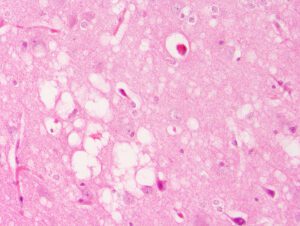
Prions, infectious proteins, pose a significant public health risk due to their ability to cause devastating neurological diseases. Unlike viruses or bacteria, prions are misfolded proteins that can alter healthy proteins, leading to neuronal cell death. Transmissible spongiform encephalopathies (TSEs), including bovine spongiform encephalopathy (BSE) and Creutzfeldt-Jakob disease (CJD), are caused by prions. Once symptoms appear, the disease is often rapid and always fatal.
Prions are difficult to detect, eliminate, and study, creating challenges for drug developers and biomanufacturers. Purification processes must effectively remove prions, and direct detection methods have limited sensitivity. For products with a risk of prion contamination, prion-clearance studies are an industry-standard approach to demonstrate that downstream purification steps can remove or inactivate prions.
Prions are exceptionally rare in human cases, with only four variant CJD (vCJD) cases reported in the United States, all linked to international exposure. However, acquired prion disease can occur through contaminated medical procedures or biologics manufacturing involving animal or human-derived materials.
To mitigate the risk, industry and regulatory authorities use risk assessments considering factors such as animal species, tissue source, manufacturing controls, and sourcing from countries with negligible or controlled BSE risk. Prion-clearance studies test whether individual purification or manufacturing steps can remove or inactivate prions. Researchers introduce prion material into scaled-down versions of production processes and measure what remains after each step.
Despite the challenges, a new experimental system may help close the gap between experimental prion models and actual human disease. Researchers at University College London have developed EKV cells, a humanized mouse-cell model that can sustain robust propagation of sporadic CJD (sCJD) prions. This model reliably generates high-titer infectious sCJD prions and enables the Human Prion Assay (HPA), which quantifies sCJD infectivity with sensitivity comparable to the gold-standard mouse bioassay.
The HPA compresses the experimental timeline from years to weeks, making experiments more reproducible and scalable.
Written by urgent.news from GEN Biotechnology's reporting — not their text. Machine-written — may contain errors; check the original before relying on it.