Neanderthal wooden tools from Spain found preserved in stone
Dissolved rock precipitated around the tools, which then decayed.
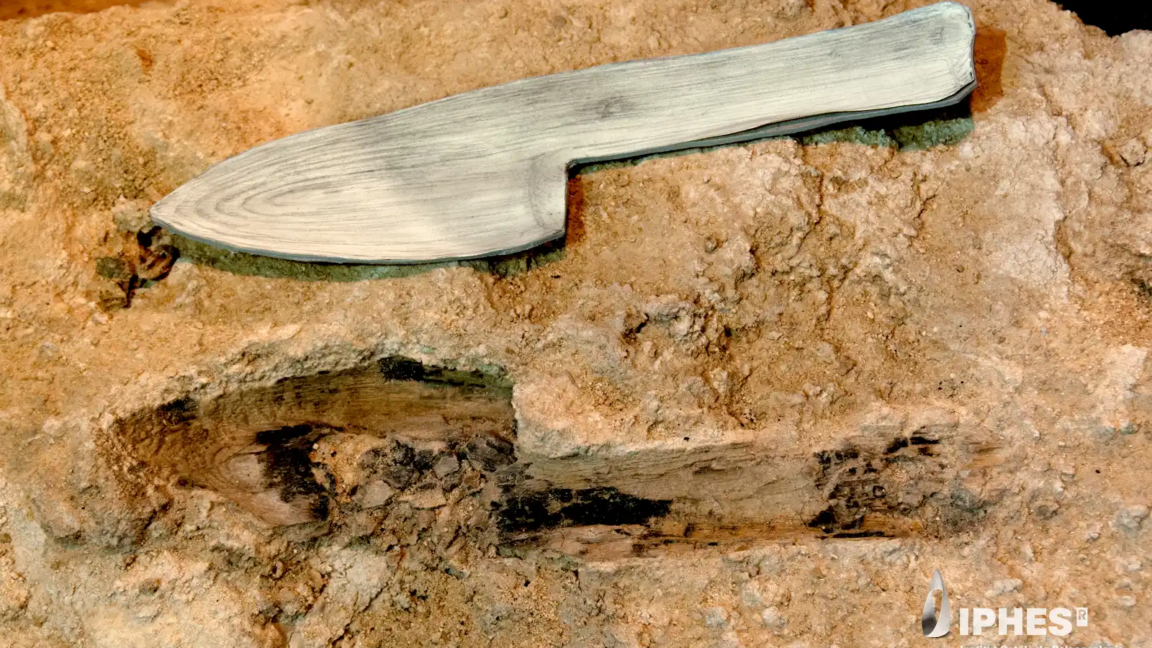
In the Stone Age, tools crafted from wood were likely the most commonly used due to their ease of processing. However, wood's susceptibility to decay makes the preservation of Paleolithic woodwork scarce. At Abric Romaní, a rock shelter situated west of Barcelona, a remarkable discovery has been made. Mineral-rich water coated Neanderthal wooden tools, forming a limestone-like crust that, upon the wood's decomposition, left behind hollow molds. These molds faithfully replicate the original tool shape.
In a recent study published in Science Advances, a team of Spanish archaeologists has meticulously cataloged 597 Neanderthal wooden remnants from living areas dating back 62,000 to 40,000 years. Among these findings were spears, digging sticks, bark trays, shelter parts, and an unusual club. This discovery suggests that Neanderthals were far more advanced than previously thought, challenging the notion that they were Homo sapiens' intellectually inferior counterparts.
Beyond hunting implements, the oldest wooden artifacts discovered so far primarily consist of weapons. These include spears originating from Germany's Schöningen, a spear tip from England's Clacton-on-Sea, and a spear found alongside an elephant skeleton in Germany's Lehringen. Most of these artifacts were unearthed from waterlogged sediments, where limited oxygen slowed decay rates.
Written by urgent.news from Ars Technica Science's reporting — not their text. Machine-written — may contain errors; check the original before relying on it.
This story
This is one outlet's version. Read the fullest account.
- Neanderthal wooden tools from Spain found preserved in stone arstechnica.com