Municipal debt billions questioned amid billing disputes
Estimated meter readings, disputed accounts and billing errors are adding uncertainty to municipal efforts to recover outstanding revenue.
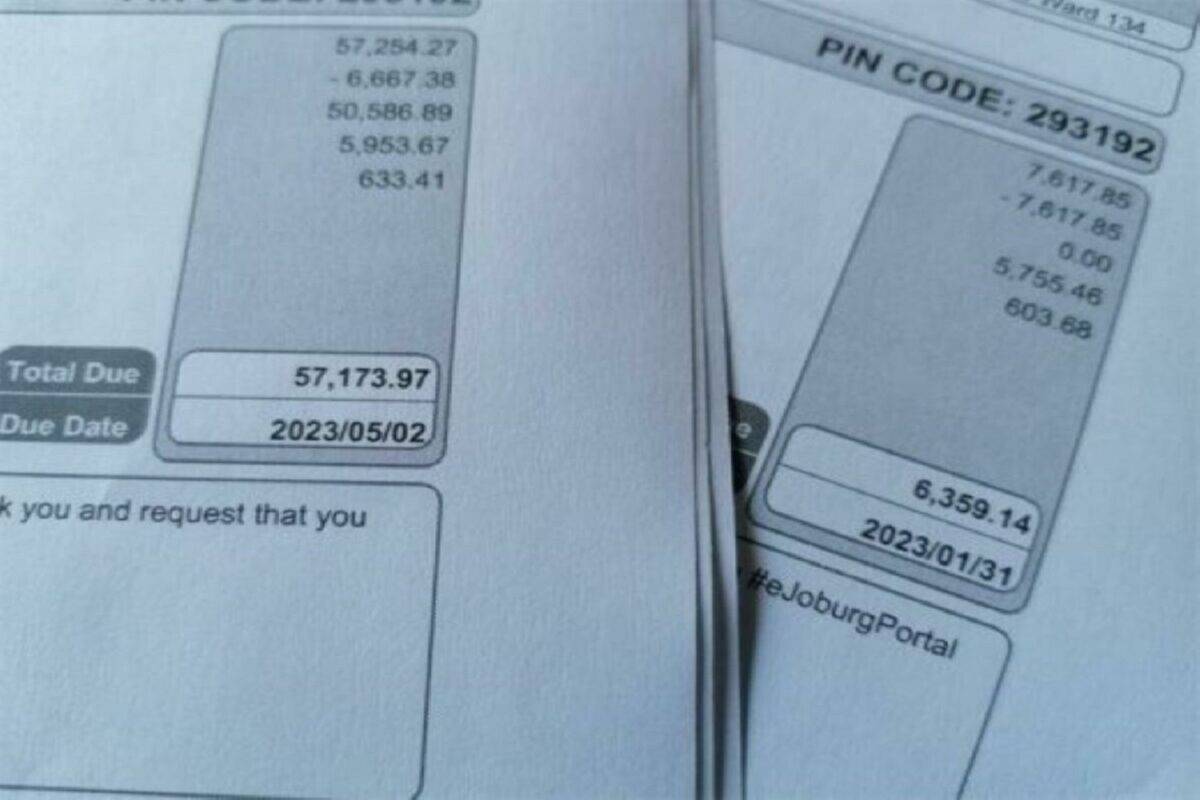
South African municipalities are struggling to collect revenue as residents face mounting bills and the risk of having their electricity or water disconnected over disputed amounts. The national debt figure released by the Treasury in March stood at R467.2 billion, with R335.3 billion owed by households and R94.7 billion by commercial users. A significant portion, R406.8 billion or 87.1%, has been classified as debt older than 90 days.
Municipalities rely heavily on estimated readings, which have been identified as a major contributor to the mounting consumer debt. Matthew Koller, a general manager at Fungi Utilities, pointed out that estimated readings, undetected water leaks, and billing discrepancies could lead to substantial catch-up bills, sometimes doubling a monthly account from R1,200 to over R3,000. Experts warn that inaccurate billing could be contributing to the country's growing municipal debt crisis.
The Democratic Alliance (DA) councillor Simon Lapping from Ekurhuleni expressed skepticism about the national debt figure, arguing that it may be far lower and in need of verification. He alleged that some municipalities had introduced questionable charges and levies over the past decade, and that incorrect accounts were often left unchallenged due to residents' fear of disconnection.
Lapping pointed out that Section 95 of the Municipal Systems Act requires municipalities to maintain accurate information about services supplied to consumers.
ActionSA's Michael Basch noted that Ekurhuleni's problems were compounded by inadequate meter readings, though he cautioned that estimated billing often resulted in undercharging rather than overcharging. He emphasized that in his experience, the issue with interim billing wasn't overcharging but rather undercharging, which became a large amount upfront when actual readings were taken.
Basch also questioned the municipality's financial planning, citing collection rates that generally hovered around 85% to 87%, despite budgets assuming collections of approximately 90%. He called for a focus on major municipal defaulters, particularly businesses and government institutions capable of paying, while offering struggling households affordable arrangements to settle arrears.
Johannesburg DA mayoral candidate Helen Zille proposed a billing overhaul, including digitizing the city's billing system, to eliminate corruption and improve the reliability of municipal accounts. She committed to reducing estimated readings through technology and appointing experts to resolve billing disputes.
Rewritten by urgent.news; may contain errors — check the original.
Source: citizen.co.za