Marode Infrastruktur: Bahn saniert bis 2031 deutlich weniger wichtige Strecken
Fast jeder zweite Fernzug kommt unpünktlich ans Ziel. Grund dafür ist auch der schlechte Zustand der Infrastruktur. Die soll nun jedoch deutlich langsamer fit gemacht werden als bislang geplant.
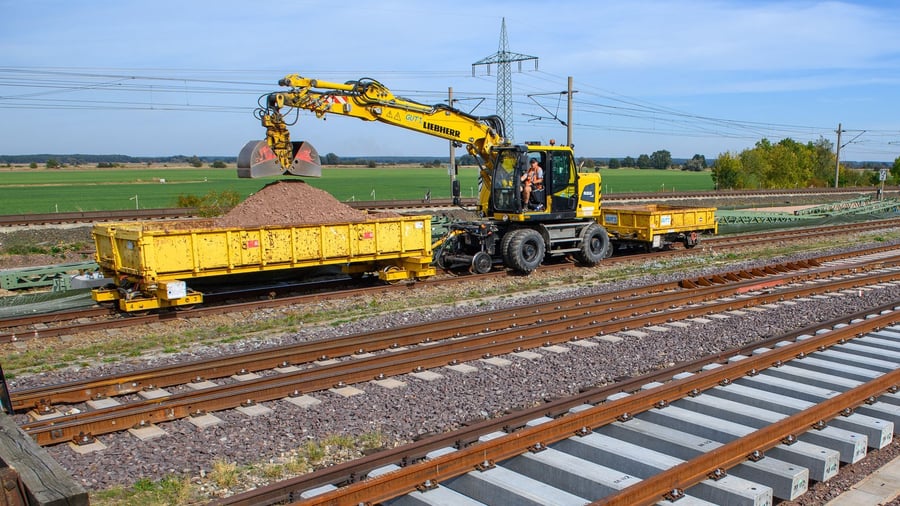
The Deutsche Bahn and the federal government have announced plans to significantly reduce the number of major railway lines repaired between now and 2031. Originally, 21 lines were to be extensively renovated, but this has been cut to just 13. The remaining repairs will now be carried out later, with the prioritization of corridor repairs after 2032 set to be determined next year.
The exact timeline for completing the comprehensive renovations of the 40 planned lines remains unclear, as opposed to the previous plan to finish by 2036. The 13 lines set to be worked on by 2031 include the Lehrte-Berlin, Rosenheim-Salzburg, Fulda-Hanau, Cologne-Koblenz-Munich-Rosenheim, Hagen-Unna-Hamm-Lübeck-Hamburg, Hamburg-Hannover-Würzburg-Ansbach-Treuchtlingen-Aachen-Cologne, Stendal-Magdeburg-Uelzen-Stendal, and Lehrte-Groß Gleidingen-Munich-Rosenhein (2nd stage).
The lines that will now start being repaired after 2031 include Bremen-Bremerhaven, Koblenz-Mainz, Forbach (Moselle)-Ludwigshafen, Stuttgart-Ulm, Frankfurt-Heidelberg, Mannheim-Karlsruhe, Bremen-Hamburg, and Würzburg-Nürnberg. The improvements sought from these Generalsanierungen are better performance on the upgraded lines. The subsidiary responsible for infrastructure, InfraGo, has been preparing the diversion routes more intensively and aligning the construction schedule with other works in the railway network.
The rail competition had previously criticized the lack of sufficient preparation and communication for diversions. Upon completion of construction, the traffic will be gradually resumed rather than all modes of transport resuming at a certain date. Unlike previous renovations, all tracks will be prepared for the digital train signaling system ETCS in the future.
This means that all renovated signaling towers will be ETCS-compatible and that adapted signal locations and modern wheel axle counting technology will be used. While this is planned for many lines, it is only required for some sections at present. The new requirement will only be fully implemented at a later date. The concept of comprehensive renovations emerged under former Transport Minister Volker Wissing and former Bahn CEO Richard Lutz and was presented in February 2023.
It was planned to have around 40 busy railway lines in Germany closed for months and extensively renovated, remaining largely free of major construction constraints and significantly more reliable for about a decade afterwards. This would improve punctuality throughout the network. The new concept remains vague regarding the periods of non-operation following a renovation.
The idea is that the track should remain "as free as possible for up to ten years from larger construction-related restrictions." The original plan involved up to eight renovations per year, but after significant criticism, particularly from competitors in freight transport, it was fundamentally changed under the new federal government in 2025.
The number of renovations per year was reduced to four or five, and the overall timeline was extended to 2036. The poor punctuality of the trains did not improve after the previous General Sanitations. In the first half of 2026, less than 60% of long-distance trains were on time. In July, the new Bahn CEO, Evelyn Palla, announced a fundamental review of the General Sanitation concept.
She admitted to being frustrated that it had not worked as planned, and that the costs and deadlines for corridor renovations were not being met. She then extended the timeline beyond 2036, indicating that the renovations would take longer.
Written by urgent.news from Handelsblatt's reporting — not their text. Machine-written — may contain errors; check the original before relying on it.