Lee oversees South Korea’s first hypersonic missile test
Seoul's test comes days after North Korean leader Kim Jong Un was reported to have overseen a test of an intermediate-range hypersonic missile.
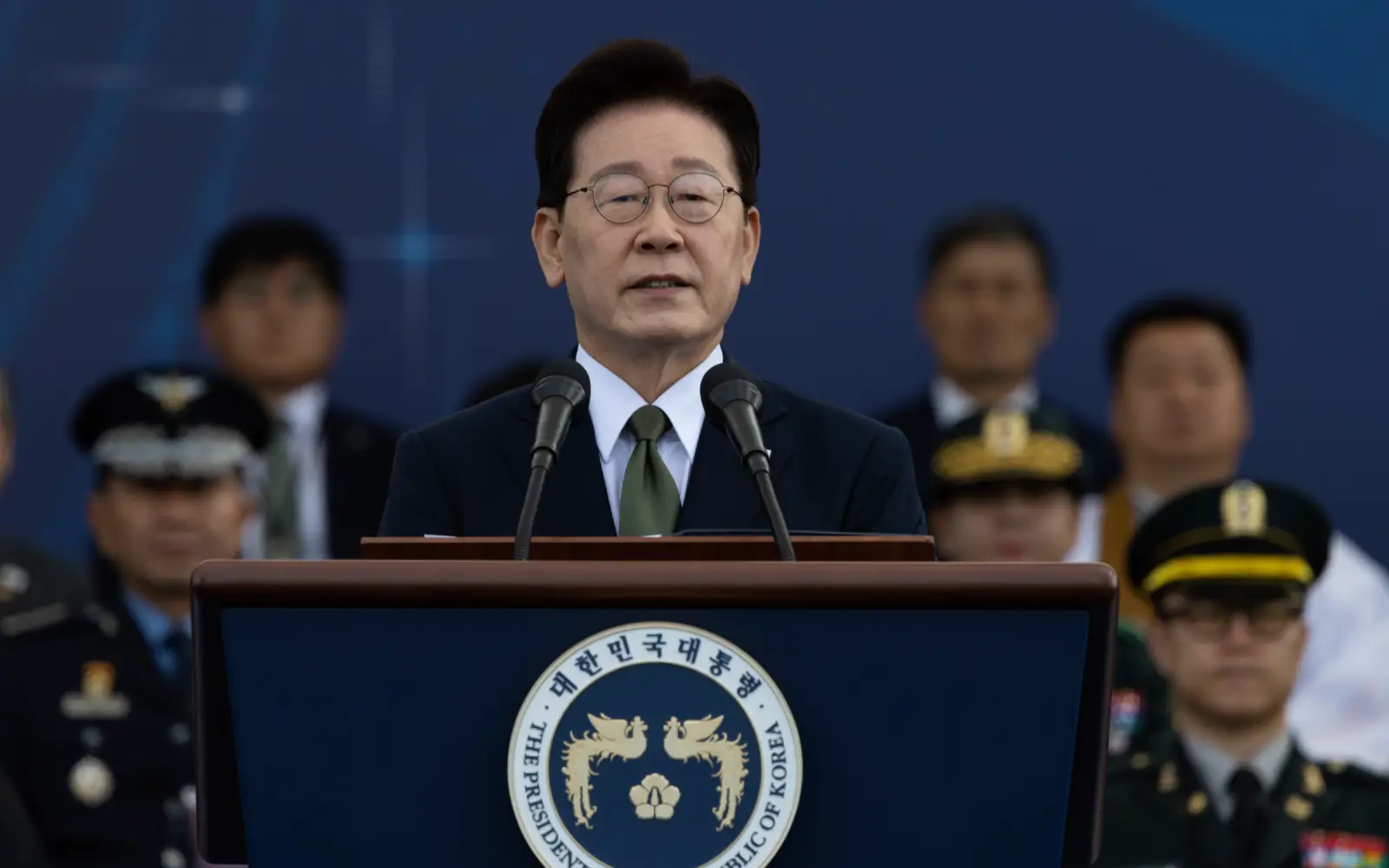
South Korean President Lee Jae Myung witnessed his nation's first successful test-firing of a domestically developed hypersonic missile on Thursday, according to a presidential office statement. The test of the hypersonic glide vehicle, a maneuverable weapon capable of changing course during flight, occurred shortly after North Korea reported that its leader Kim Jong Un had also conducted a test of an intermediate-range, hypersonic missile.
In a Facebook post, President Lee expressed his pride in the achievement, calling it a milestone in South Korea's self-reliant defense efforts. He emphasized that the country will continue to invest steadily in advanced defense technologies, including hypersonic propulsion, artificial intelligence, and high-powered lasers.
The South Korean missile is seen as a strategic asset by the presidential office, with the ability to strike targets swiftly and unexpectedly due to its unpredictable flight paths and extraordinary speed. Following the test, Lee instructed missile researchers at a state-run institute to rapidly advance and deploy the technology.
Hypersonic weapons are known to travel faster than five times the speed of sound, often at low altitudes, and are characterized by their maneuverability, which allows them to hit targets with high precision.
Rewritten by urgent.news; may contain errors — check the original.
Source: freemalaysiatoday.com
This story
This is one outlet's version. Read the fullest account.
- Lee oversees South Korea’s first hypersonic missile test freemalaysiatoday.com