Kioxia unveils E1.L SSDs for hyperscalers with up to 122.88TB capacity
Kioxia's LD4-series SSDs can store up to 122.88TB of data in a compact form-factor, but its performance remains a mystery.
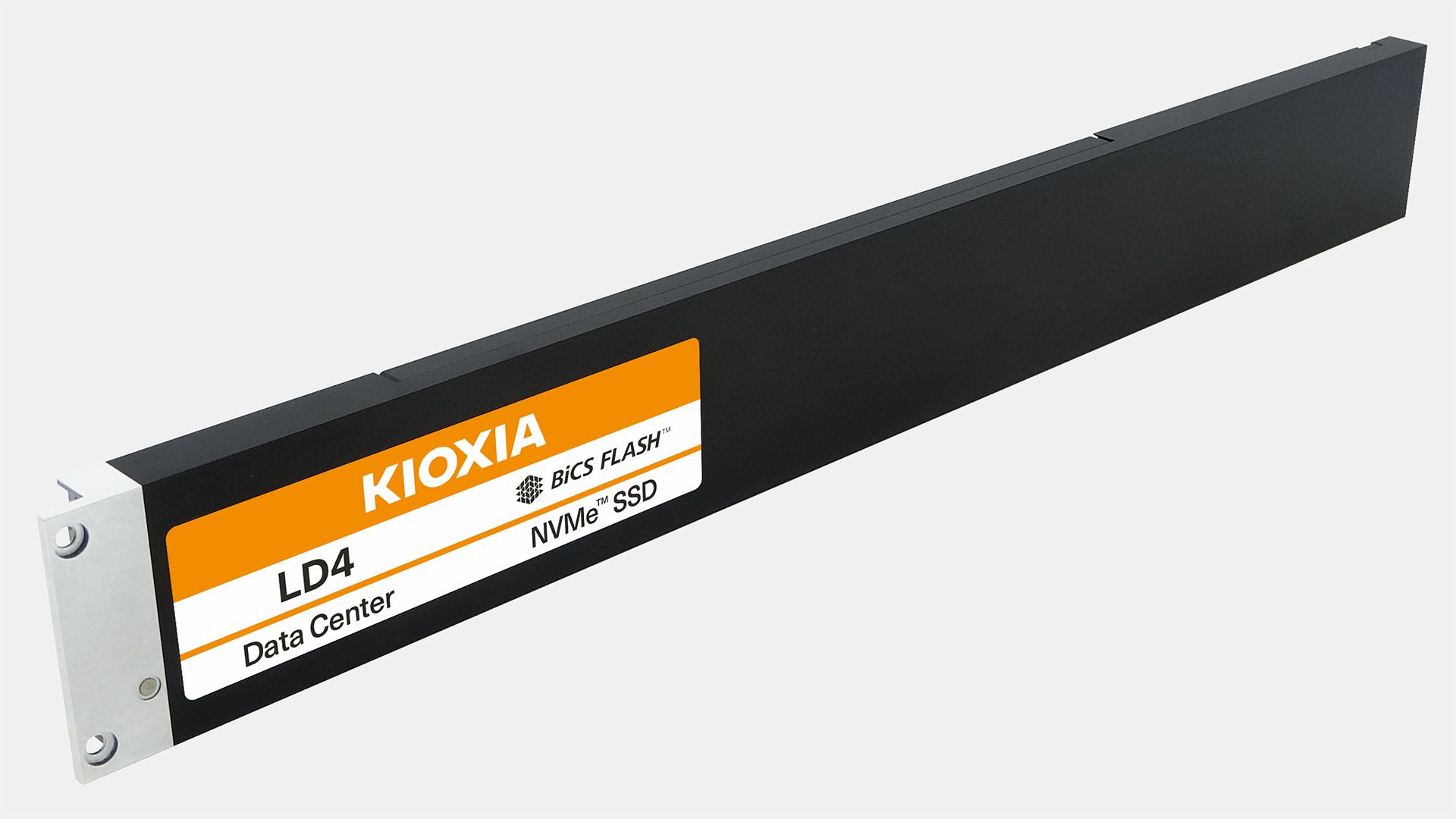
Kioxia has unveiled its LD4-series solid-state drives (SSDs) in an E1.L form factor, boasting capacities of up to 122.88TB. These drives utilize BiCS8 3D QLC NAND and cater to high-density storage needs in hyperscale data centers, particularly for read-intensive workloads such as AI data repositories and object storage. The drives adhere to the NVMe 2.0e specification and operate at PCIe 4.0 x4 speeds, providing a theoretical maximum bandwidth of approximately 7.88 GB/s in each direction.
Kioxia's LD4-series SSDs leverage a proprietary platform, designed to fit multiple 3D NAND flash packages on an elongated printed circuit board within a thin 1U server. This design allows for maximizing storage capacity within existing rack space, a crucial feature for large-scale storage deployments. Samples of 15.36TB and 30.72TB LD4 drives have been provided to select customers, with 122.88TB configurations expected to be available and mass production yet to be announced.
Written by urgent.news from Tom's Hardware's reporting — not their text. Machine-written — may contain errors; check the original before relying on it.