Investing in Indonesia’s future: Why five strategic sectors matter
From toll roads and data centers to geothermal energy, healthcare and battery materials, INA is putting long-term capital behind Indonesia’s future.
Investing in Indonesia’s future is the focus of the Indonesia Investment Authority (INA), which aims to bolster key sectors essential for the country's long-term growth. Established in December 2020, INA's mission is twofold: to generate robust financial returns while simultaneously fostering national development and public welfare. INA's Senior Director of Investment, Rhesa T. Hanani, explains that the chosen sectors are non-cyclical, offering stable and defensive characteristics that complement each other.
The five strategic sectors identified by INA are digital infrastructure, green energy, advanced materials, transportation and logistics, and healthcare. These sectors are crucial as they can generate economic value beyond individual investments. INA closely examines four factors when evaluating potential investments: the sector, company or asset; valuation and structure; and the partner or operator. Each factor must be strong for INA to proceed with a particular investment.
One of the primary reasons behind INA's focus on these sectors is Indonesia's geography, which underscores the importance of connectivity for economic development. Transportation and logistics have been INA's largest cumulative sector allocation, accounting for 44% of its total investment to date. INA has supported the development of over 250 kilometers of toll roads and partnered with DP World to construct the Belawan New Container Terminal, a vital key port on the Strait of Malacca.
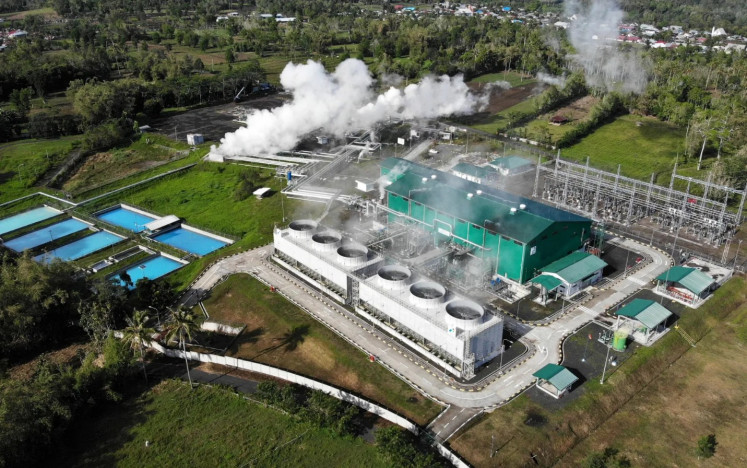
The green energy sector is also a priority for INA, as Indonesia seeks to balance increasing energy demands with decarbonization efforts. Through investments alongside Masdar in Pertamina Geothermal Energy, INA supports one of Indonesia's largest geothermal portfolios, generating approximately 395 GWh of clean electricity per month and reducing around 0.3 million tonnes of CO₂-equivalent emissions monthly.
Healthcare is another critical sector for INA, as it recognizes the crucial role of robust healthcare infrastructure in promoting productivity and quality of life. INA supports Indonesia Healthcare Corporation (IHC), the largest hospital network in the country, and Kimia Farma Apotek, a prominent retail pharmacy platform. Additionally, INA is investing in Indonesia’s first and Southeast Asia’s largest blood plasma fractionation facility, which is projected to have a processing capacity of 600,000 liters per year.
In the realm of advanced materials, INA aims to bolster Indonesia's downstreaming agenda and enhance the country's standing in global value chains. A notable example is the collaboration with Changzhou Liyuan to develop a lithium iron phosphate (LFP) cathode production platform. The first phase of this project achieved an annual production capacity of 30,000 tonnes in 2025, with a second phase of 110,000 tonnes commencing in early 2026 and a third phase of 120,000 tonnes expected to become operational in early 2027.
This expansion is poised to strengthen Indonesia's role in the global battery value chain while promoting domestic downstream industrial development.
Written by urgent.news from The Jakarta Post's reporting — not their text. Machine-written — may contain errors; check the original before relying on it.