Indigenous cultural burn near Osoyoos revives traditional fire stewardship
Smoke rising over the grasslands west of Osoyoos this week is part of a carefully planned burn aimed at doing more than reducing wildfire risk.
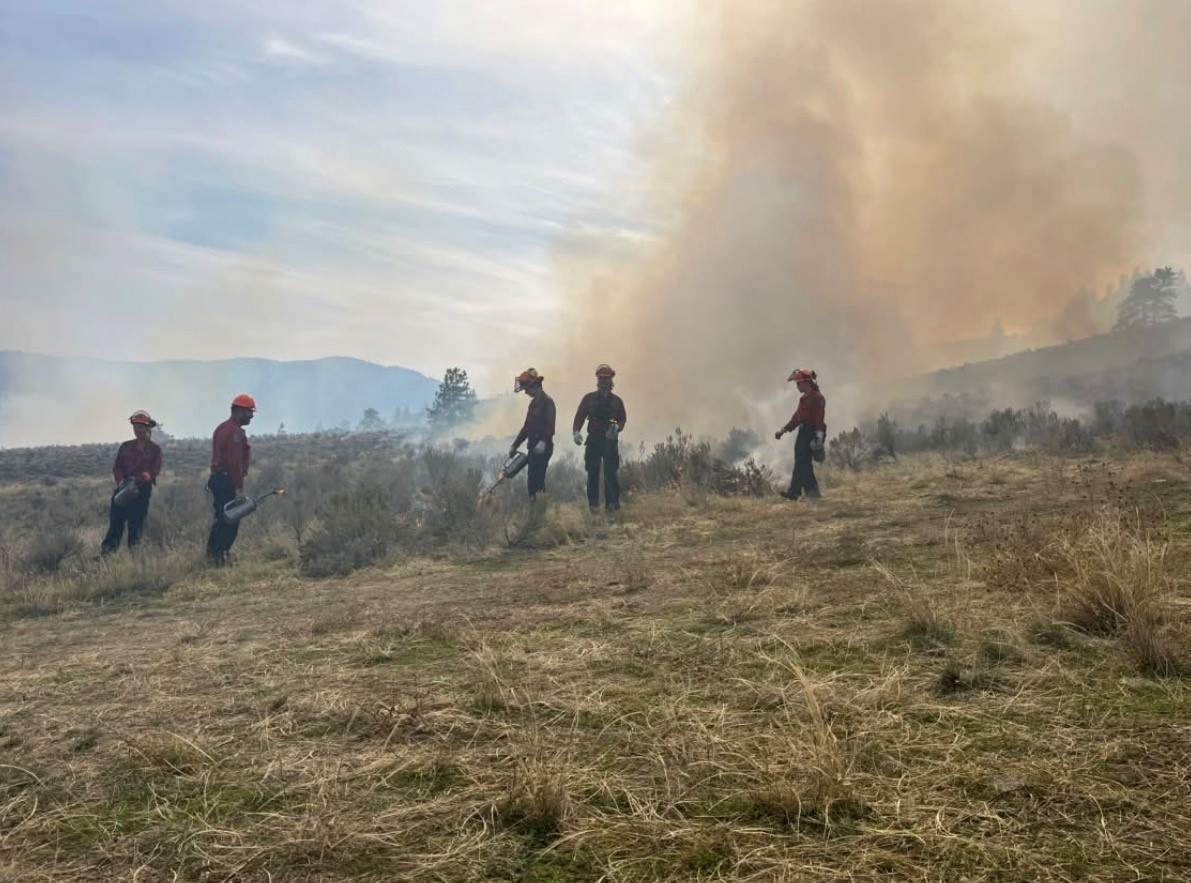
Smoke billowing over the grasslands west of Osoyoos this week marks the beginning of a meticulously planned burn, not just to mitigate wildfire risk but to rekindle Indigenous cultural fire practices that were suppressed for generations. The Lower Similkameen Indian Band, in collaboration with the B.C. Wildfire Service, is overseeing the approximately 160-hectare burn in the Nighthawk Road area.
Councillor Julia Peterson emphasizes that this project is about reintegrating traditional knowledge with contemporary wildfire management. “It was abolished, you know, by previous law, and so we’re really trying to bring those practices back, and combine these together with Western science,” she explains. For Peterson, the work is intrinsically linked to ceremony and the bond between the land and the community.
“Ceremony connects us to land, it connects us to the animals, to the water,” she states. “This is bringing this ceremonial practice back into our community.”
The controlled fire aims to enhance the health of the grasslands by clearing excess vegetation, promoting native grasses, and improving wildlife habitats. Local landowner Daryl Gibb, whose Nighthawk RV Park borders the burn site, observes how unchecked growth can lead to heightened wildfire danger. “At the bottom of the hill there was a lot of sagebrush that choked out the grass,” Gibb notes.
“Getting rid of that sagebrush will definitely bring the grass back again.” He also anticipates that the fire will lessen the risk to nearby communities and properties, reflecting on a significant wildfire that occurred just across the river six to eight years ago, along with smaller local incidents.
The initiative exemplifies the collaboration between First Nations and government bodies in wildfire preparedness. Justin Smith of the Lower Similkameen Indian Band Emergency Management stresses that wildfire knows no jurisdictional boundaries. “Everybody’s in the same boat,” Smith remarks. “The fire doesn’t recognize the boundary.
The fire doesn’t even recognize the border. It just goes where it wants to go.” This underscores the critical importance of cooperation as communities across the region strive to reduce fuel loads and prepare for the escalating intensity of fire seasons.
Peterson acknowledges that the Nighthawk Road burn is part of a broader necessity for treatment across the region. “We still have many other areas that need this kind of treatment to bring safety to the communities, both on and off reserve,” she emphasizes.
Rewritten by urgent.news; may contain errors — check the original.
Source: globalnews.ca
This story
This is one outlet's version. Read the fullest account.