Governance failure in Ghanaian football and a presidential reform agenda
The day after Carlos Queiroz left the Black Stars as head coach, the Sports Minister sat the GFA down and handed over seven directives. The technical team and the national team management committees would be dissolved. Separate men’s and women’s committees would replace them. A five-member panel would help find the next coach, and the GFA would not be allowed to appoint one alone. It looked…
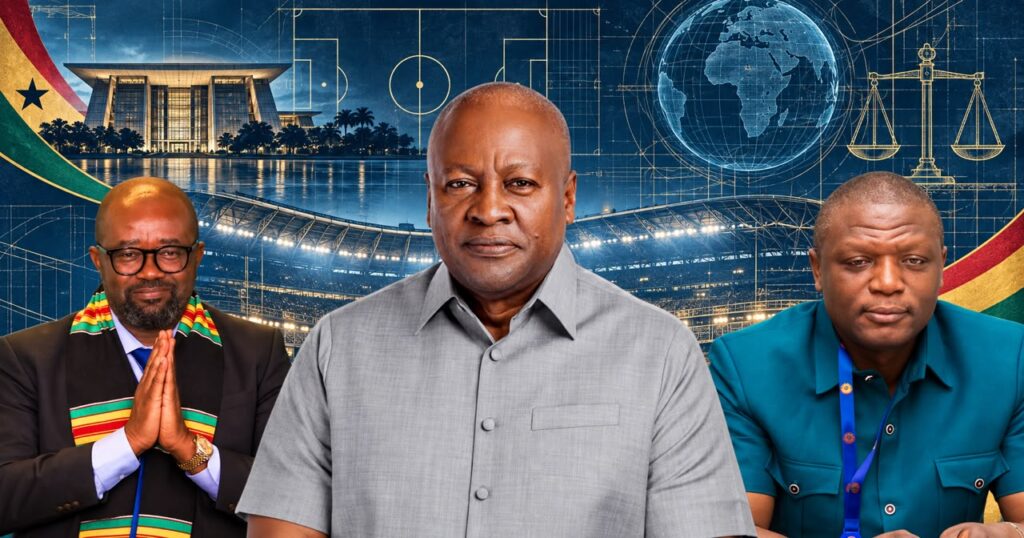
Ghana's football administration has been plagued by governance issues, with a presidential reform agenda aimed at addressing these problems. The Sports Minister handed seven directives to the Ghana Football Association (GFA) following Carlos Queiroz's departure as head coach. These directives included dissolving the technical team and national team management committees, establishing separate men's and women's committees, and forming a five-member panel to find the next coach.
However, the directives failed to address key concerns such as who sits at the decision-making table, whose interests they serve, and who can check their actions.
The author notes a recurring pattern of misconduct in Ghanaian football, likening it to the "cocoa season" problem where issues are ignored and accountability is rarely demanded. The Dzamefe Commission's 2014 report revealed that US$4 million was flown to the 2014 World Cup, but US$122,500 was unaccounted for. Additionally, supporters' catering and unused match tickets resulted in unexplained financial discrepancies.
The White Paper acknowledged these issues and proposed reforms, including a Public Interest Committee, a publicly accounted bank account for sponsorship money, and the enforcement of the FIFA Standard Cooperation Agreement. However, the 2025 GFA Statutes have not implemented these reforms.
The GFA's Executive Council is composed of twelve seats, with members belonging to existing football constituencies. There is no independent director or supporter on the council. The clubs hold 92 out of the 124 delegate seats, equivalent to 74%. Amending the Statutes requires three-quarters of delegates present, making it difficult for any proposed changes to pass.
The President's term limit does not apply to his previous roles on the council, allowing for a potential 24 years in office. The GFA's declaration of ownership over competition rights is also at odds with the White Paper's principle that national team revenue belongs to the Ghanaian people.
Comparatively, England's Football Association (FA) underwent a significant reform after facing criticism for its role in the failed European Super League. The government commissioned a Fan-Led Review, which included input from over 130 clubs, administrators, players, and independent experts. The FA rebuilt its board with ten directors, including an independent non-executive chair, a chief executive, and independent directors.
Half of the board now reports to no club, ensuring greater independence. In contrast, Ghana's GFA has no independent director and relies solely on the clubs for representation.
Other models, such as Spain's Law 39/2022 and Portugal's approach, demonstrate how a state can take a supervisory role in football governance without being prohibited. These models include the creation of supervisory commissions and the ratification of regulations by a national sports council, providing greater oversight and accountability.
Written by urgent.news from MyJoyOnline Ghana's reporting — not their text. Machine-written — may contain errors; check the original before relying on it.