Giant tortoises now outnumber people in Seychelles
Giant tortoises that were once hunted to the brink of extinction now outnumber humans in the Seychelles, with a landmark scientific survey estimating that nearly 183,000 of the animals live on a remote Indian Ocean atoll. The remarkable recovery of the Aldabra giant tortoise, whose population had fallen to fewer than 1,000 during the 19th century, is being hailed as one of the Indian Ocean’s…
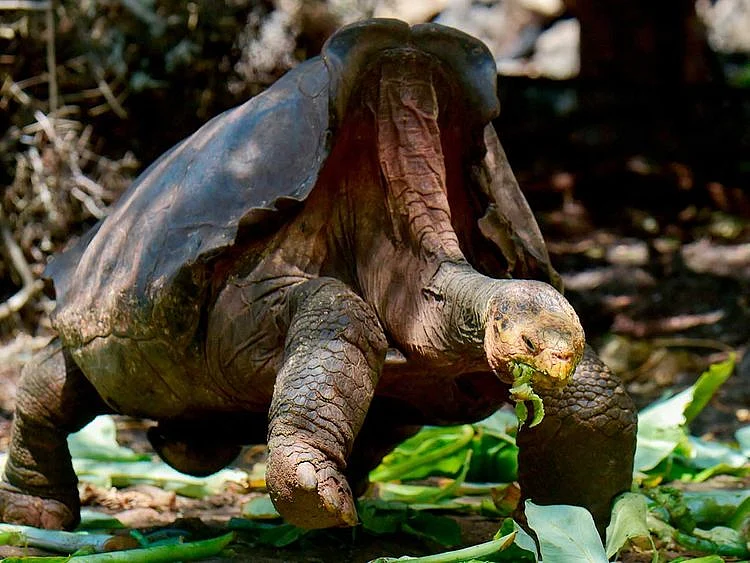
A landmark study has revealed that giant tortoises now outnumber the human population in Seychelles, with an estimated 183,000 of the ancient reptiles inhabiting Aldabra Atoll, as reported by scientific research conducted by the Seychelles Islands Foundation and the University of Exeter. This remarkable recovery of the Aldabra giant tortoise, which had dwindled to fewer than 1,000 individuals during the 19th century, marks one of the Indian Ocean's most significant conservation triumphs.
The survey, which analyzed five years of population data collected between 2018 and 2022, is the highest recorded estimate for the species, surpassing the human population of Seychelles, which stood at approximately 123,000 at the end of 2025. Jonathan, a Seychelles giant tortoise, holds the Guinness World Record as the oldest living land animal.
Aldabra Atoll, a remote Indian Ocean island ecosystem and one of only two places where giant tortoises still exist in the wild, has been recognized as a UNESCO World Heritage Site since 1982. The protection afforded to the atoll, coupled with long-term conservation efforts, allowed the tortoise population to rebound from near extinction.
While the new population estimate significantly exceeds previous figures, scientists caution that it does not necessarily indicate a doubling of the tortoise population. Earlier surveys did not account for tortoises hidden beneath vegetation or resting in shaded areas, which made accurate counting challenging. Advanced statistical modeling was employed to estimate the number of tortoises that survey teams could not directly observe.
Although the findings offer a promising glimpse into the success of long-term conservation efforts, experts warn that climate change and invasive species continue to pose threats to the animals. Droughts, rising sea levels, and predation by feral cats and black rats could further endanger the tortoise population. Nevertheless, the study provides a valuable foundation for future conservation work and helps establish a baseline for monitoring population changes and responding to emerging environmental threats.
Written by urgent.news from Gulf News's reporting — not their text. Machine-written — may contain errors; check the original before relying on it.