Frozen testicular tissue transplanted in bid to restore fertility after chemotherapy
Protecting fertility is a major challenge for young men undergoing aggressive treatments such as chemotherapy. Freezing their own testicular tissue before such treatments could help.
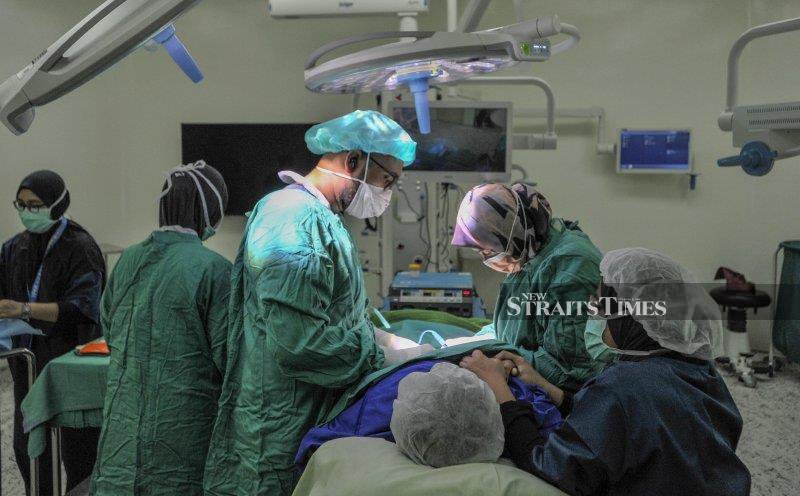
In Edinburgh, a young patient has undergone a groundbreaking procedure involving the transplantation of his own, previously frozen testicular tissue following chemotherapy. This innovative approach, a first in the UK and second globally, holds the potential to revolutionize male fertility preservation, particularly for young men whose fertility is threatened by aggressive treatments like chemotherapy.
Professor Rod Mitchell, a developmental endocrinology expert at the University of Edinburgh's Institute for Regeneration and Repair, expressed optimism about the procedure, stating that it represents a significant step towards enabling boys facing fertility-damaging treatments to conceive their own children.
The patient, 19 years old, received a bone marrow transplant in 2023 to combat a severe blood disorder. Prior to initiating chemotherapy, he had his testicular tissue removed and cryopreserved due to the potential for high-dose chemotherapy to permanently impair the cells responsible for sperm production. Three years later, tests revealed that the patient no longer had sperm in his semen.
In August 2026, doctors reintroduced some of his previously frozen testicular tissue into his body, with the objective of stimulating sperm production.
The patient, reflecting on his personal struggle with fertility, expressed genuine hope in the future following the transplant, stating that it has provided him with a renewed sense of possibility. In the coming eight months, researchers will remove and analyze a portion of the transplanted tissue to assess whether sperm have been generated.
Freezing testicular tissue poses a significant challenge for young men undergoing intense treatments such as chemotherapy. While semen freezing is a well-established option for adolescents and young men, it is not an option for prepubertal boys who have not yet begun producing semen, thereby leaving them without a means to preserve their fertility.
In contrast, storing testicular tissue presents a viable alternative, as it contains spermatogonial stem cells capable of producing sperm from puberty onwards. Researchers hope that tissue frozen before treatment can be returned to the patient, thereby enabling sperm production. The Edinburgh testicular project, initiated in 2015 with backing from Children with Cancer UK, has stored testicular tissue from over 1,200 patients in the UK and more than 3,100 worldwide for potential future clinical applications.
Professor Mitchell highlighted the potential of this study to offer hope to future fertility options for young men facing cancer treatments. The trial procedure in Edinburgh marks the first of its kind in the UK and only the second reported globally. The initial transplantation of frozen testicular tissue was carried out in Belgium in January 2025, involving a cryopreserved tissue reintroduced into an infertile man who had undergone chemotherapy during his childhood, 16 years after storage.
Preliminary study results indicated that dormant stem cells within the transplanted tissue became active and began producing sperm cells, a process known as spermatogenesis. Upon examination a year after surgery, researchers confirmed that the sperm cells had fully developed.
Written by urgent.news from Euronews's reporting — not their text. Machine-written — may contain errors; check the original before relying on it.