Beyond the Badge: Why Chinese Carmakers Are Now Structural Players in South Africa
South Africa’s new-vehicle market sold 61,645 units in September, up 12.7% on a year earlier, and three Chinese brands made the top ten. Chery took seventh place with 3,004 units, GWM was eighth and Jetour ninth. The league table shows only part of the shift, which is now reshaping finance, manufacturing and the legacy brands’ share of the market.
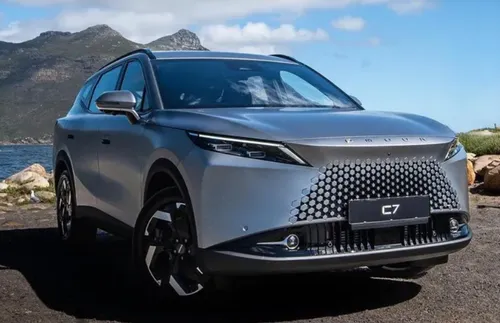
Chinese car manufacturers have become significant players in South Africa's automotive market, now holding about 19.1% of the passenger and light commercial vehicle market, up from roughly 4% in 2021. The growth in Chinese sales accelerated to 72% year-on-year in the second quarter of 2026, compared to the 3% growth experienced by traditional manufacturers.
This shift is primarily driven by economic factors, with Naamsa's chief economist, Paulina Mamogobo, attributing it to pressure on disposable incomes and elevated interest rates, which make Chinese vehicles more attractive to budget-conscious buyers.
According to a survey by Cars.co.za, price (70.8%) and fuel efficiency (52.5%) are the top priorities for South African buyers. Fuel costs have further boosted the appeal of Chinese vehicles, as petrol prices rose to R23 per litre in April due to an escalation in the Middle East conflict. Lending data from banks indicates that Chinese brands have gained a larger share of the market without significantly increasing the average SUV purchase price.
BYD accounts for 61% of electric vehicle (EV) finance applications at Absa, while used vehicles from Chinese brands represent about 6% of Absa's used-vehicle finance applications, indicating a growing market for Chinese-made used cars.
However, residual values for Chinese-made vehicles are still largely unknown, which could test buyer confidence in the secondary market. Official figures do not capture the full extent of the market, as major Chinese players such as Geely, Dongfeng, and iCaur do not yet report monthly sales to Naamsa. Geely has reserved 200 units of the E2 model for South Africa and received over 2,400 orders within two months of its announcement.
Exports to South Africa of EV and plug-in hybrid vehicles have hit a record R1.35 billion in July, around six times the previous year's level.
Chinese car manufacturers have learned from previous experiences. Chery, for instance, launched in South Africa in 2007, exited in 2018, and returned in 2021. The company's earlier withdrawal was due to complaints about quality, spare parts, and after-sales support. Chery has since taken ownership of a former Nissan factory in Tshwane, with production expected to begin in mid-2027, starting with the Tiggo 4.
The company plans to retain all 692 existing employees from the previous Nissan plant and expects to create nearly 3,000 direct and indirect jobs. Chery aims to achieve 40% local content by 2028 and has a long-term vision of selling more than 100,000 vehicles annually. The 40% local content figure is crucial in determining whether Chery's strategy leads to genuine industrial development or remains a repackaged import model.
This outcome will depend on the extent to which components are manufactured locally as opposed to being imported.
The pressure on Chinese car manufacturers in South Africa is unevenly distributed, with Toyota maintaining a strong presence, growing from 10,797 units in March 2021 to 13,323 units in March 2026. However, mid-market players like Chery have gained significant ground, outselling major brands such as Kia, Renault, Nissan, and the BMW Group in the first half of 2026.
TransUnion's Ayesha Hatea suggests that Chinese brands are now structural players in the industry, influencing dealer networks, financing, and the debate around localisation. Four key indicators will determine whether this trend continues: affordability, delivery on these four factors, and how effectively Chinese brands address past criticisms and implement industrial development strategies.
Written by urgent.news from IOL's reporting — not their text. Machine-written — may contain errors; check the original before relying on it.