Antarctica’s penguins are sending us a distress signal
This story was originally published by The Guardian and is reproduced here as part of the Climate Desk collaboration. The world’s largest penguin colony has declined by two-thirds since 2011, most likely because of the climate crisis, a study has revealed. Scientists said the rapid demise of chinstrap penguins on Zavodovski, the northernmost of the […]
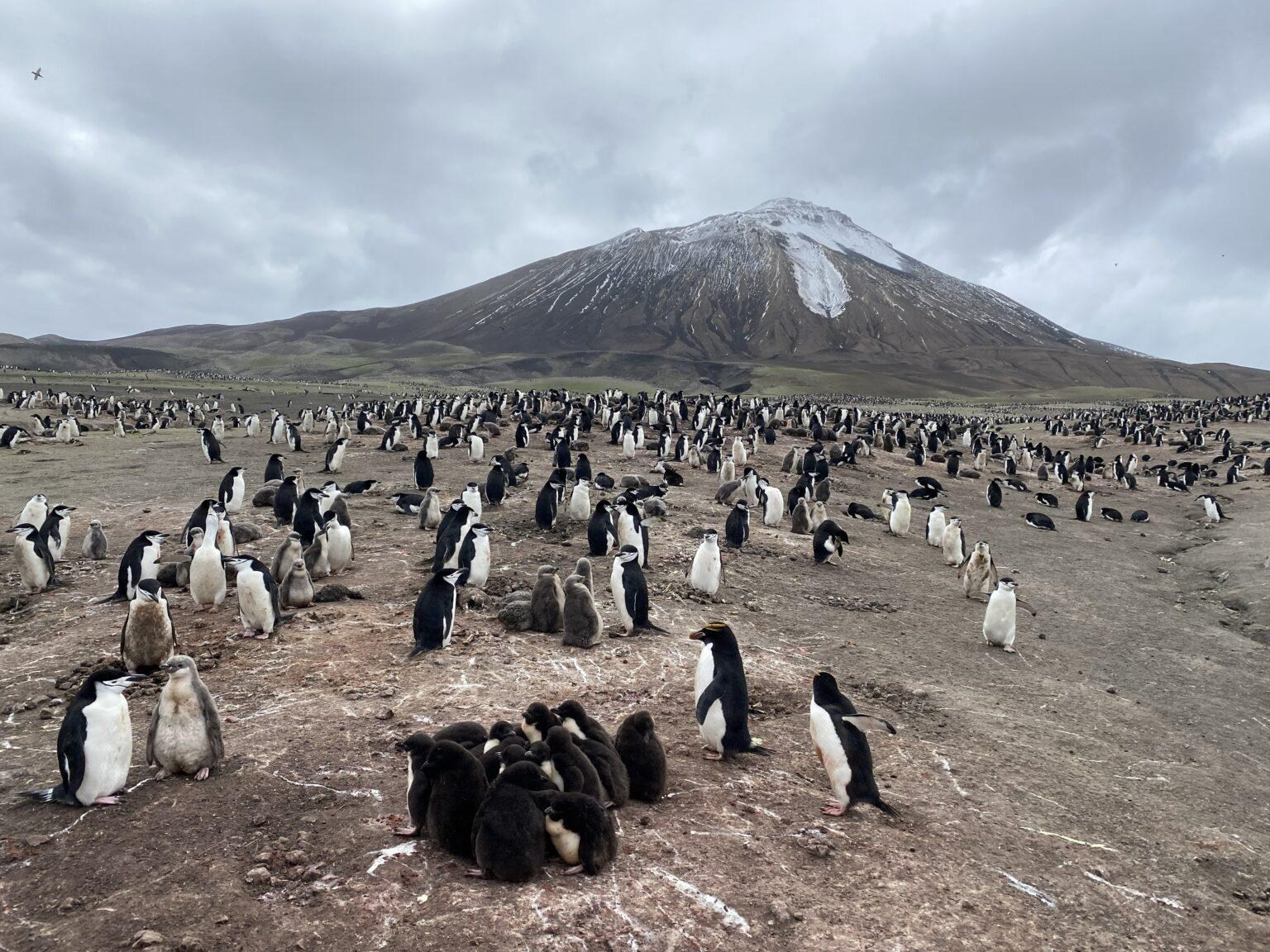
A severe decline in the population of chinstrap and macaroni penguins on Zavodovski Island, a volcanic site in Antarctica, has been documented by researchers. According to a study published in Current Biology, the number of chinstrap penguins has plummeted by two-thirds since 2011, potentially leading to a broader ecosystem collapse.
Professor Norman Ratcliffe, a penguin ecologist at the British Antarctic Survey, attributes the rapid decline to climate change. Winter temperatures on and around the Antarctic Peninsula have risen by 5 degrees Celsius above preindustrial levels, one of the quickest increases globally. Chinstrap penguins, which rely on specific diets and ocean temperatures, have been unable to adapt to the warming waters.
They prefer cooler waters to the northwest, where they find Antarctic krill, their primary food source. However, as the waters heat up, the krill have migrated south into the Weddell Sea. Macaroni penguins, on the other hand, have managed to increase their numbers by 30%, but this cannot compensate for the loss of chinstrap penguins.
The scientists ruled out other possible causes, such as competition for food or human interference, and found no evidence of a sudden population drop due to the 2016 volcanic eruption. The loss of chinstrap penguins could have severe consequences for the entire ecosystem, as every component removed increases the risk of a complete collapse.
Written by urgent.news from Vox's reporting — not their text. Machine-written — may contain errors; check the original before relying on it.