Abu Dhabi's mangroves: A natural solution to climate change and coastal protection
Abu Dhabi: Mangrove trees, locally known in the UAE as qurm, are assuming growing strategic importance in Abu Dhabi as the emirate steps up efforts to address the impacts of climate change, protect coastal ecosystems and advance its environmental and climate objectives. Growing in coastal areas influenced by tidal movements and capable of withstanding high salinity and harsh environmental…
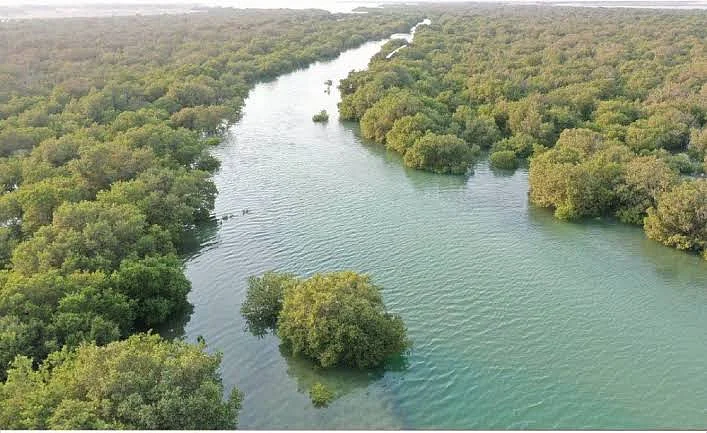
In Abu Dhabi, mangrove trees, or qurm, are gaining significance in the emirate's climate change adaptation and coastal protection strategies. These trees, adapted to harsh coastal environments with high salinity, serve as an integrated natural system that absorbs carbon dioxide, protects coasts from erosion, and provides habitats for marine life and birds.
Mangrove forests are crucial in combating global warming, as they absorb and store carbon, both in the trees themselves and in the surrounding soils. This "blue carbon" is particularly valuable due to its long-term storage capacity, provided the ecosystems remain intact.
In Abu Dhabi, mangroves are found in areas like the Eastern Mangroves and on several islands and marine zones. These habitats offer nursery grounds for marine organisms, protection for juvenile fish, crustaceans, and other species, and serve as breeding and resting sites for birds.
The UAE has approximately 60 million mangrove trees covering 200 square kilometers, with a goal of increasing this to 100 million by 2030. This commitment underscores the country's dedication to climate action and sustainability. Mangroves also hold cultural significance in Emirati heritage, with the country's protection efforts tracing back to the 1970s under Sheikh Zayed bin Sultan Al Nahyan.
Written by urgent.news from Gulf News's reporting — not their text. Machine-written — may contain errors; check the original before relying on it.