Why haze disrupted flights despite 2km visibility at Senai
JOHOR BARU: Haze that reduced visibility at Senai International Airport to about 2,000 metres disrupted flight operations this morning, forcing aircraft to delay departures or divert.
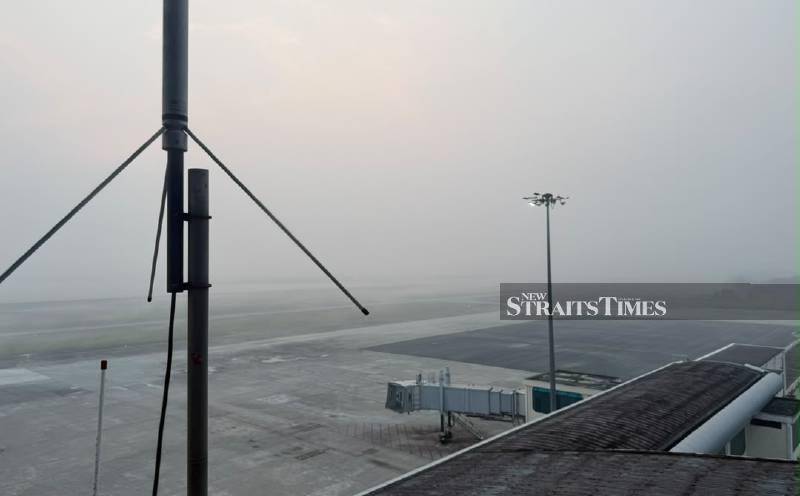
Haze at Senai International Airport reduced visibility to around 2,000 meters, causing flight delays and diversions on this morning. Transport Minister Anthony Loke stated that five incoming and departing flights were impacted by the poor visibility, which failed to meet safety requirements. Several aircraft were redirected to Kuala Lumpur, while one was diverted to Changi Airport in Singapore.
Flights yet to take off were held at the gate. Loke's own flight from Kuala Lumpur to Senai, scheduled to depart at 6:45 am, was delayed by 1 hour and 45 minutes due to air traffic control's advice that the aircraft could not land. The airport's Instrument Landing System (ILS) assists aircraft in navigating Runway 16 during poor weather, but it does not allow landings in all visibility conditions.
Decision-making is based on published approach minima and the aircraft and operator's capabilities. Factors such as decision height and runway visual range (RVR) are evaluated, which measure the distance a pilot can see along the runway, not general airport visibility. The European Union Aviation Safety Agency regulations require operators to establish minima considering aircraft performance, equipment, runway characteristics, visual aids, crew competence, and low-visibility approvals.
This means a reported visibility of around 2,000 meters should not be seen as an automatic cut-off point for all aircraft. The Malaysian Meteorological Department forecasts haze over Johor Baru from morning until night as the haze situation continues to affect the state.
Written by urgent.news from New Straits Times's reporting — not their text. Machine-written — may contain errors; check the original before relying on it.
This story
This is one outlet's version. Read the fullest account.