Why a good elementary school is so hard to identify
Did you know search engines like Google are changing the way you see news? Keep Chalkbeat’s valuable education coverage at the top of your feeds by clicking here and checking the box next to our name. What’s the quality of education like at Brooklyn’s P.S. 307? This was the elementary school where New York Times writer Nikole Hannah-Jones sent her daughter. In a much-discussed essay , she…
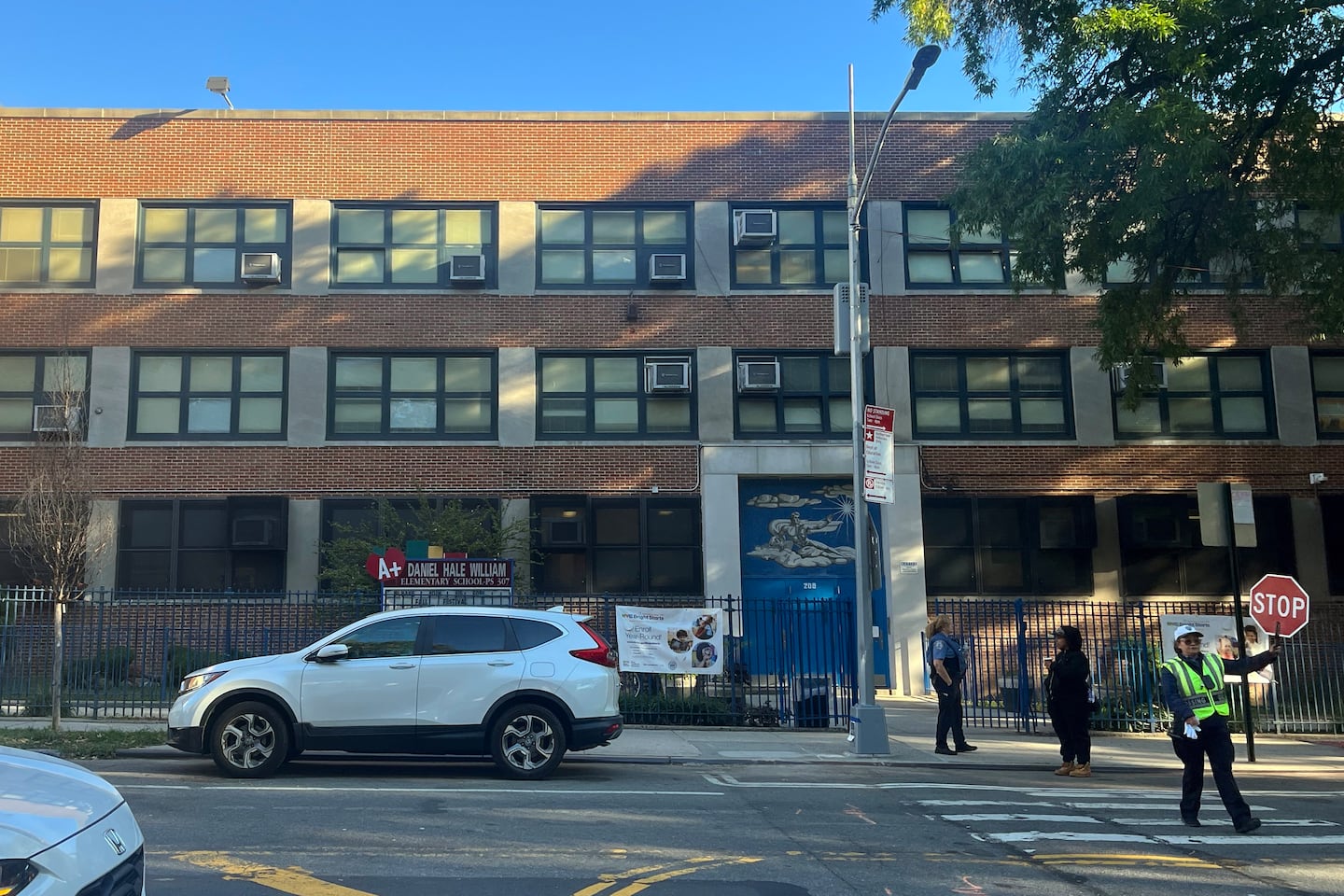
Identifying a high-performing elementary school can be a daunting task for parents and city officials alike. The quality of education at Brooklyn's P.S. 307, where writer Nikole Hannah-Jones once sent her daughter, has been called into question. In a widely discussed essay, Hannah-Jones described low expectations, an indifferent administrator, and disappointing outcomes.
However, schools can change over time as staff changes. The principal of P.S. 307, a relative newcomer, declined to be interviewed for this story. To determine the current state of the school, one might start by examining math and reading test scores. In 2025, only around a quarter of P.S. 307's students were proficient on state exams, falling short of the city average.
Nevertheless, raw scores like these do not provide a complete picture of a school's effectiveness, as numerous other factors come into play. Experts suggest considering how much progress students make at a given school instead. However, calculating growth scores for New York City and state schools yield different results for P.S.
307. The city's metric places the school below average, while the state's places it slightly above. This discrepancy introduces confusion for both parents and officials. The difficulty in measuring elementary school growth stems from the way test scores are collected and analyzed. Researchers have developed complex statistical models to estimate a school's "value-added" score, which represents its contribution to student learning.
However, these models have been debated, particularly when applied to teachers. New York City started publishing value-added or "impact" scores for most schools a few years ago, but their accuracy in elementary schools remains uncertain. Some experts question whether the model properly accounts for a student's third-grade performance as a baseline.
Other researchers have raised concerns about the validity of New York City's elementary impact measure. They argue that it should be based on third-grade scores to accurately measure progress in fourth and fifth grades. While the state's metric tracks year-over-year growth based on prior test scores, it only considers the later grades and neglects early success or failure.
This limitation could penalize schools that excel in early grades but struggle in later ones. In high-stakes evaluations, such a measure could incentivize moving the best teachers out of younger grades, a practice that some research suggests occurred during the No Child Left Behind era. City officials implemented the current model to account for student demographics like poverty, but they do not include third-grade scores.
They note that students with disabilities and English language learners may have separate baseline testing data. Ultimately, there is no straightforward, quantitative method to judge elementary school growth, as testing begins in third grade. Addressing this challenge is a significant issue for parents and policymakers alike, as determining whether a school is effectively helping students make academic progress remains a complex task.
While test scores are an important factor, they are just one piece of the puzzle. Talking to parents and school staff can provide valuable insights into a school's environment and teaching quality.
Written by urgent.news from Chalkbeat's reporting — not their text. Machine-written — may contain errors; check the original before relying on it.