Wantimpres and its million-dollar question
Prabowo’s supersize, 26-strong advisory council offers plenty of room for political accommodation.
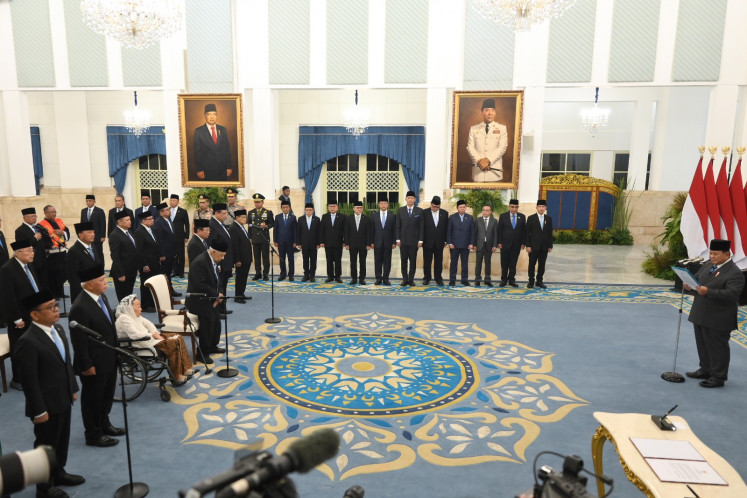
President Prabowo Subianto inaugurated a monumental 26-member advisory council on October 2, marking the largest such body in the institution's history. This expansion, nearly tripling the previous nine-member councils, sparked immediate debate over the council's capacity to enhance presidential decision-making. The real test, however, lies not in the council's size, but in the expertise of its members.
Public administration theory suggests that an advisory council's effectiveness hinges on the quality of its counsel, not the stature of its members. Experts point to John Halligan's "policy advisory system" model, which examines how executives source intelligence, and Jonathan Craft and Michael Howlett's emphasis on the balance between political proximity and technical acumen among advisers.
Yet, the Wantimpres 2024 lineup reveals a concerning dearth of specialists in critical areas like climate change, energy transition, digital economy regulation, public health architecture, and fiscal reform.
While the council's composition remains heavily weighted with political figures and community leaders, the absence of technical specialists raises questions about the council's ability to provide comprehensive guidance. The 2024 revision of the Wantimpres Law that abolished the nine-seat limit and granted the president unilateral control over council size eliminated institutional safeguards.
Consequently, the current council configuration appears to prioritize political accommodation over the provision of specialized technical expertise necessary for modern governance challenges.
Written by urgent.news from The Jakarta Post's reporting — not their text. Machine-written — may contain errors; check the original before relying on it.