VIR seminar focuses on taking domestic suppliers into global supply chains
Comprehensive reform enhancing the absorption capacity of domestic enterprises to join global supply chains was the focus of a panel discussion at a seminar organised by em VIR em in Hanoi on October 8
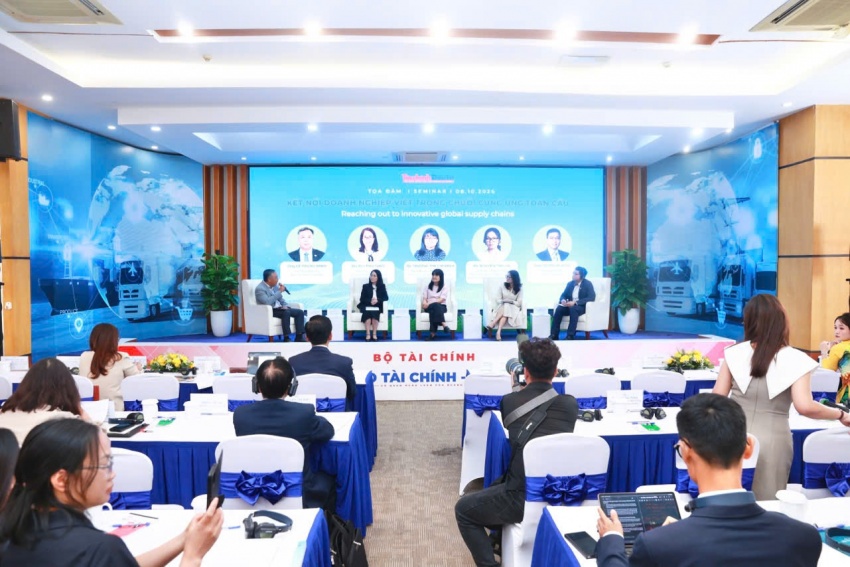
The recent seminar organized by VIR focused on the role of domestic suppliers in participating in global supply chains. A key discussion point was the new requirements stemming from Resolution No.10-NQ/TW, which aims to develop an economy based on foreign investment rather than merely attracting it. This shift necessitates a change in mindset and approach to managing foreign direct investment (FDI) at both national and local levels.
Agencies must adopt a development-oriented mindset, supporting investors throughout the entire project lifecycle.
To effectively leverage FDI, several conditions are essential. Firstly, a robust institutional framework is necessary, encompassing appropriate procedures and governance capacity at central and local levels. This framework must provide the necessary incentives and support mechanisms to encourage foreign-invested enterprises to transfer technology and enhance spillover effects into the domestic economy.
Secondly, strategic infrastructure and an industry ecosystem are crucial. This includes not only traditional infrastructure but also digital infrastructure and the capacity to supply stable and clean energy. The quality of human resources is also vital, as a highly skilled workforce is required to attract and effectively manage high-tech projects, particularly in fields such as semiconductors, AI, and automation.
Truong Thi Chi Binh, deputy chairwoman of the Vietnam Association for Supporting Industries (VASI), emphasized that for export-oriented manufacturing, multinational companies typically rely on their existing global supply chains when establishing production in Vietnam. Local firms aiming to join global supply chains must receive clear government support.
Various countries, such as Thailand, Malaysia, and China, have implemented distinct strategies for the electronics industry. China, for example, benefits from lower land costs in large production sites, while Vietnam faces higher industrial land costs, around $170 per square metre, along with high interest rates for long-term loans.
This discourages investment, prompting Vietnam to consider offering free or heavily subsidised land to attract manufacturers.
Vietnam already has over 500 capable supporting-industry suppliers, and with the right policies, these firms can expand together, forming larger supply chains. Over the past decade, strong export growth and rising domestic demand have helped transform many small and medium-sized enterprises (SMEs) into substantial companies. VASI now includes several large enterprises, with the goal of developing 10 to 20 leading companies that can help smaller partners enter their supply chains and share their experiences.
Written by urgent.news from Vietnam Investment Review's reporting — not their text. Machine-written — may contain errors; check the original before relying on it.