Vietnamese exporters face rising carbon costs as EU CBAM tightens pressure
With more than US$3 billion in exports exposed to the EU’s Carbon Border Adjustment Mechanism ( CBAM), Vietnamese businesses face mounting pressure to cut emissions as carbon costs become a key factor in pricing and competitiveness. Green construction credit remains limited Vietnam reports nearly VND621 trillion in outstanding green credit HCMC targets VND1 trillion in remittance mobilization for…
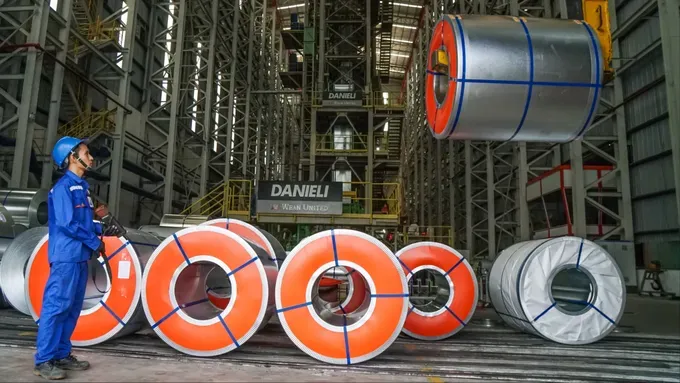
Vietnamese exporters are bracing for higher carbon costs as the EU’s Carbon Border Adjustment Mechanism (CBAM) tightens its grip, with over US$3 billion worth of Vietnamese goods exposed to the policy. The CBAM seeks to apply a fair carbon price to imported goods, factoring in the environmental impact of emissions. For high-emission products, this could mean severe price disadvantages and reduced competitiveness, risking lost orders and shrinking market share.
Tran Ngoc Quan, Commercial Counselor and Head of the Vietnam Trade Office in Belgium and the EU, explained that the CBAM certificate price for Q2 2026 is 75.28 euros per ton of CO2. Considering that steel production generates around two metric tons of CO2 per metric ton of output, the carbon cost could account for up to 23 percent of product value if companies fail to implement effective emission reduction solutions.
While the burden won't be fully felt in 2026 due to phased implementation, the pressure is already evident. Higher emissions translate to larger carbon costs, and the lack of proper emission data could result in default EU values, driving expenses even higher. As carbon costs are integrated into product prices, businesses are being forced to balance the cost of emissions against the cost of investing in reduction technology.
This transforms compliance costs into direct calculations impacting corporate pricing and competitiveness. While domestic green financial markets are currently abundant, these funds have not been heavily directed towards production sector projects, particularly those involving line modernization, energy efficiency, and direct emission reduction.
To address this, the Vietnamese government is constructing a regulatory framework for the carbon market, establishing emission quota allocation and trading for around 150 heavy-emitting enterprises, including those in the thermal power, iron and steel, and cement sectors. The key challenge now is bridging the gap between carbon market infrastructure and actual business transition capabilities.
Establishing tailored emission factors and databases will help enterprises identify priority stages for emission reduction and prove transition results, ultimately improving competitiveness and controlling carbon costs.
Written by urgent.news from SGGP English Edition Business's reporting — not their text. Machine-written — may contain errors; check the original before relying on it.