US wraps up military mission in Iraq, giving Baghdad room to strengthen China ties
The US has ended its military mission in Iraq, a move analysts said could give Baghdad more room for diversified partnerships and indirectly benefit China’s energy and commercial interests. But they cautioned that the shift was unlikely to create a power vacuum for Beijing to fill, with China lacking both the ambition and capacity to take on the US security role. The United States formally ended…
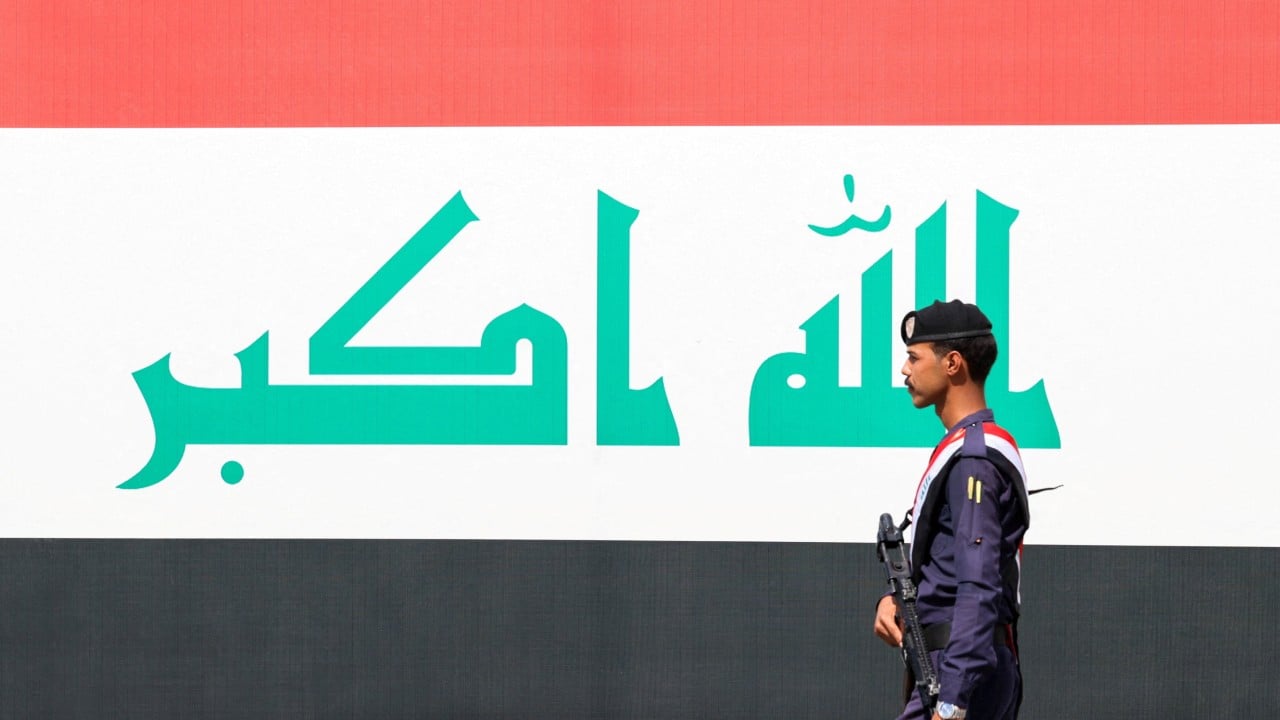
The United States has concluded its military mission in Iraq, a development that could afford the Baghdad government greater flexibility in forging diverse partnerships, potentially to China's benefit, according to analysts. However, experts cautioned that the shift would not create a power vacuum for Beijing to fill, as the Chinese regime lacks both the desire and capability to assume the US security role in the region.
On September 30, the US formally concluded its Operation Inherent Resolve mission in Iraq, marking the culmination of a withdrawal agreement from 2024 under the former Biden administration. The mission, initiated in 2014 to combat the Islamic State, has since been supplanted by an Iraqi-led security initiative, while the US has pledged continued targeted training and intelligence assistance.
This move concludes a tumultuous 20-year US military footprint in Iraq, which commenced with the 2003 invasion that toppled Saddam Hussein and ushered in a Shiite-led government. Washington initially withdrew its forces in late 2011 before returning less than three years later to confront the Islamic State threat. For China, the withdrawal may prove significant not in supplanting the US presence but in granting Iraq greater autonomy in its foreign relations.
Li Weijian, a researcher at the Shanghai Institutes for International Studies, posited that reduced US involvement could empower Iraq to pursue a more balanced diplomacy. He noted that Iraq and other Middle Eastern nations have been striving to lessen their reliance on the US, potentially fostering a more amenable environment for Chinese engagement.
Li emphasized that China's historical economic interests in Iraq's energy sector and infrastructure projects were not contingent on the US's departure. Nonetheless, he stressed that China was not seeking to supplant the US or inherit its security role. Jesse Marks, founder of Rihla Research and Advisory, cautioned that assessing the US's role in the Middle East after the drawdown remains premature, stating that the current withdrawal is as much a political decision as a practical one.
Marks underscored that ending the mission does not necessarily signal the cessation of the US security relationship with Iraq. Consequently, Beijing is unlikely to capitalize on the US withdrawal to assume security responsibilities, at least for now. The US's influence in Iraq is projected to persist through diplomatic and security ties rather than through competition with China over infrastructure or energy, as asserted by Marks.
Kenneth Katzman, a senior fellow at the New York-based Soufan Centre, concurred, asserting that China does not envision a security role in Iraq due to Beijing's limited force-projection capabilities and lack of ambition in that regard. Instead, Katzman highlighted that China's primary interest lies in energy, encompassing securing supplies and investing in Iraq's substantial energy industry.
Katzman further opined that China's economic interests would be most advanced by a stable Iraqi state equipped to safeguard energy infrastructure and maintain predictable relations with multiple external partners.
Written by urgent.news from South China Morning Post's reporting — not their text. Machine-written — may contain errors; check the original before relying on it.