Turtles found buried in metres of mud returned to rejuvenated wetland
Turtles rescued from the Gingham Waterhole in north-west NSW have begun returning, while keepers at Taronga Western Plains Zoo in Dubbo incubate more than 250 eggs laid by females brought into care.
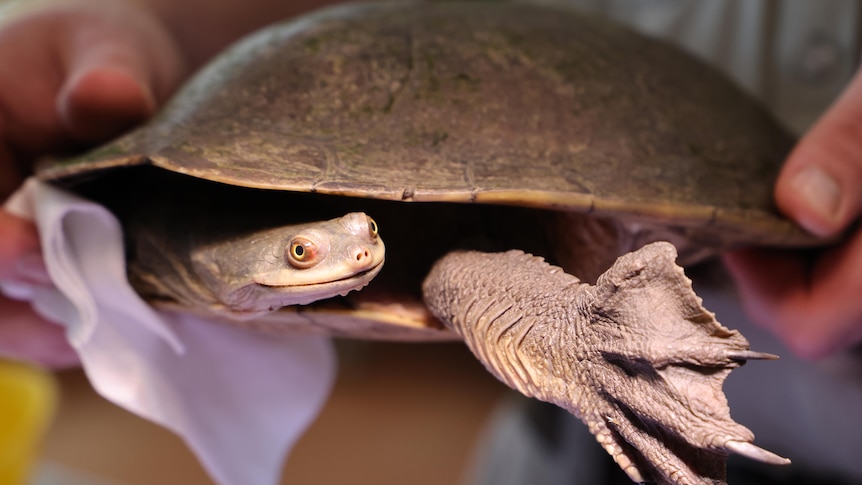
After months in captivity, the first rescued turtles from Gingham Waterhole in the Gwydir Wetlands near Moree have returned to their natural habitat. The Taronga Western Plains Zoo in Dubbo played a crucial role in rehabilitating the turtles and is now incubating over 250 eggs laid by the reptiles. The remaining adult turtles will be released gradually, with hatchlings anticipated to join them by the end of next year.
In September, ten broad-shelled turtles and three Murray River turtles were released at the Gingham Waterhole by the NSW Department of Climate Change, Energy, the Environment and Water (DCCEEW). The turtles were among 39 rescued from the waterhole after it dried up in April and was taken to the zoo for rehabilitation.
Senior keeper James Witcombe expressed his excitement, stating that witnessing the first turtles return to a restored wetland after being cared for was a significant achievement. He emphasized the importance of this moment, noting that it showcases the transition from a devastating situation to a brighter future. Witcombe highlighted the challenges faced during the turtles' rehabilitation, including cleaning off the thick, filthy mud they were covered in upon arrival.
The turtles were found burrowed deep in the mud, a result of the waterhole being temporarily suspended from environmental water flows earlier in the year. Once deemed healthy, they were gradually acclimated to a controlled environment, with their water temperature lowered to mimic winter conditions and provided with UV lamps and basking areas to meet their light requirements. Despite initial setbacks, the turtles' recovery progressed swiftly.
Interestingly, the initial health checks revealed that 14 female broad-shelled turtles were carrying eggs. Since these turtles typically lay their eggs during rainy conditions, keepers induced egg-laying to facilitate the incubation of the eggs. Currently, more than 250 turtle eggs are being nurtured in an incubator at the Dubbo zoo, with a high likelihood of a substantial number hatching successfully.
The hatchlings are expected to be released into the wild by the end of next year. Environmental flows were resumed in late May, allowing the systematic release of the turtles as conditions improved and their health was confirmed. DCCEEW executive director of conservation programs, Ingrid Emery, emphasized the selective release of the reptiles, ensuring they are returned progressively as the ecosystem recovers and they are deemed fit for the environment.
Emery expressed optimism about the ecosystem's recovery, noting that ongoing ecological monitoring will assist in assessing the wetland's health and planning future water management strategies. The released turtles will not be individually tracked, but Emery assured that future monitoring efforts will provide valuable insights into the wetland's well-being and aid in the strategic planning of environmental water deliveries.
Written by urgent.news from ABC News AU's reporting — not their text. Machine-written — may contain errors; check the original before relying on it.