The ghost of Biela’s Comet: It created a storm and disappeared
November's Andromedid meteor shower is from the ghost of Biela’s Comet. It stunned observers in the 1800s, breaking up and producing meteor storms. The post The ghost of Biela’s Comet: It created a storm and disappeared first appeared on EarthSky .
The Andromedid meteor shower, also known as Bielids, is the result of the remnants of Biela's Comet, a celestial body that once graced the skies in the late 1700s and early 1800s. French astronomer Jacques Leibax Montaigne first observed this comet in 1772, and Austrian astronomer Wilhelm von Biela later recognized its periodic nature, determining that it orbited the sun every 6.6 years.
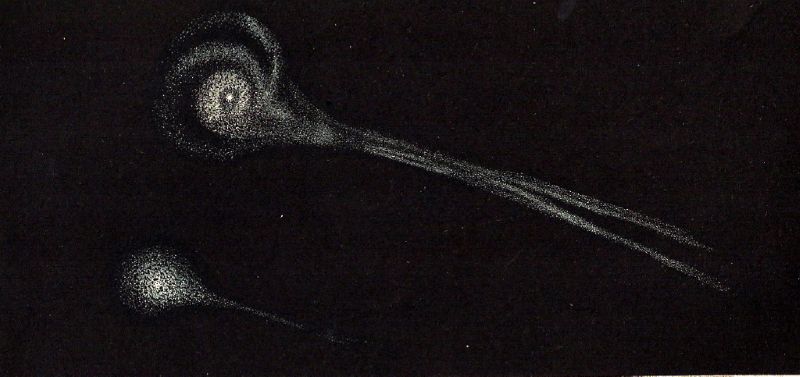
However, when Biela's Comet returned in 1846, it underwent a dramatic transformation, splitting into two pieces and exhibiting a distinct pear shape. These two comet halves continued their journey around the sun, with one trailing approximately 174,000 miles (280,000 km) behind the other. Despite the comet's disappearance by the 1850s, its influence persisted in the form of a meteor shower that reappeared twice as meteor storms.
These intense events, characterized by a meteor rate of at least 1,000 per hour, occurred on November 27, 1872, and again in 1885, with the latter storm producing an astonishing 75,000 meteors per hour. Since then, the Andromedid meteor shower has largely diminished in intensity, with only a handful of dim meteors visible to the naked eye.
Written by urgent.news from EarthSky's reporting — not their text. Machine-written — may contain errors; check the original before relying on it.