The factory is becoming a decision-making system
Smart factories are shifting from automation to adaptability, but AI only works with trusted data, skilled workers and strong governance.
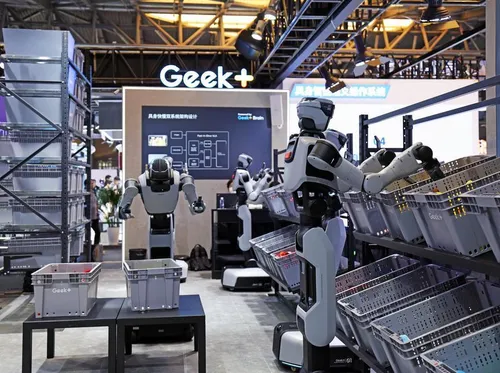
The manufacturing landscape is evolving, with artificial intelligence, robotics, sensors, cloud platforms and interconnected supply chains coming together to form a cohesive operating environment. This transition is no longer confined to experimentation but is rapidly becoming a reality. Robots are now equipped with sensors, computer vision, and AI to navigate unpredictable environments and adapt to changing conditions.
This development holds particular significance in warehouses and logistics, where flexibility is as crucial as speed.
The World Economic Forum's Intelligent Industrial Operations Outlook 2026 paints a picture of a shift from traditional automation towards intelligent, connected, and increasingly autonomous systems. The Global Lighthouse Network now spans hundreds of advanced manufacturing sites utilizing technologies such as AI, robotics, cloud computing, and big data.
The transformative potential lies not in the technology itself, but in how manufacturers can leverage it. AI excels at analyzing production data to uncover patterns that might elude human observation in real time. This capability enables the detection of emerging quality issues, anticipation of equipment failures, adjustment of production schedules, and even demand forecasting.
By predicting potential disruptions instead of reacting to them, manufacturers can proactively manage their operations, reducing downtime and enhancing inventory management.
The implications extend beyond the factory floor. Modern production processes rely on intricate networks of suppliers, ports, warehouses, transport operators, and distributors. A disruption in one part of this network can swiftly impact others. To address this, AI systems are being devised to identify disruptions, evaluate alternatives, and coordinate responses across various supply chain components, all while adhering to predefined limits.
However, the success of intelligent manufacturing is contingent on the availability of robust data. Companies cannot expect AI to address fragmented operations if their data is incomplete, inconsistent, or siloed. The World Economic Forum has underscored the critical role of trusted data, integrated processes, governance, and clear human oversight in this transformation.
This digital transformation is not merely about acquiring cutting-edge technology; it fundamentally involves reimagining how organizations operate. It also necessitates a focus on cybersecurity, accountability, and data governance, which must be integral to the strategic planning. Furthermore, the rise of intelligent factories does not imply the elimination of human presence in production.
Instead, repetitive and data-intensive tasks are increasingly automated, allowing workers to transition into roles that demand technical expertise, judgment, problem-solving, and oversight. According to the World Economic Forum's 2026 Human-Machine Collaboration Framework, three-quarters of industrial jobs are projected to evolve, with approximately 40% of future industrial skills being new or emerging.
This underscores the importance of investing in training as a means to bolster industrial competitiveness.
For developing economies, this transformation presents both opportunities and challenges. To bolster manufacturing, these countries must not only attract factories but also develop digital infrastructure, technical skills, reliable energy, data capabilities, and policies that enable businesses to adopt advanced technologies without sidelining their workforce.
Consequently, the future factory will not be defined solely by the speed at which robots operate. It will be characterized by the seamless integration of machines, data, and people into a cohesive system. Manufacturing is transitioning from automation towards adaptability. The organizations and economies that effectively harness technology to foster rapid learning, improved decision-making, and resilient supply chains will be better positioned to thrive in an economy marked by increasing unpredictability.
Written by urgent.news from IOL's reporting — not their text. Machine-written — may contain errors; check the original before relying on it.