The Confident Complexity of Whitney Houston
When Whitney Houston appeared on The Arsenio Hall Show in the early weeks of 1991, Arsenio’s other guest was Roseanne Barr, who had notoriously sung “The Star-Spangled Banner” at a San Diego Padres game the previous year. The host asked Barr if
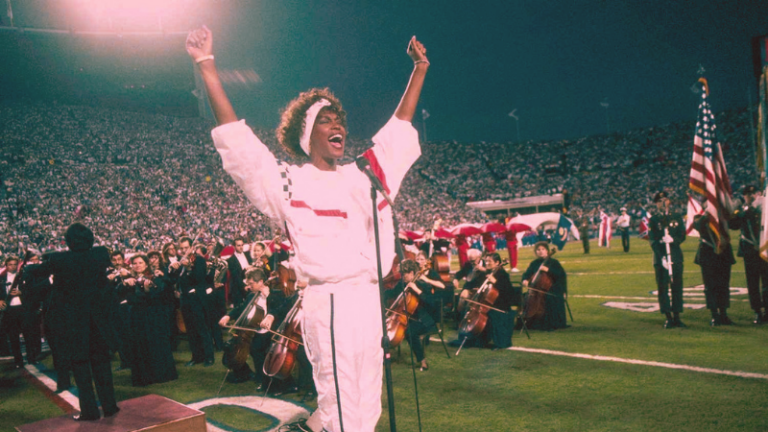
Whitney Houston's performance of the national anthem at Super Bowl XXV in 1991 was nothing short of iconic. The performance, which took place in Tampa, was notable not only because of Houston's powerful voice but also due to the unique approach she took with the song. Houston's rendition was not only a tribute to her Black heritage but also a statement against the nationalism that was prevalent at the time due to the Gulf War.
Houston's musical approach to the anthem was more pro-Black than pro-American. She and her producer, Rickey Minor, discussed different versions of "The Star-Spangled Banner" she loved, including Marvin Gaye's minimalist rendition at the 1983 NBA All-Star Game. Gaye's version was subversive, challenging the traditional interpretation of the anthem.
Houston's performance was a masterclass in embodiment and synchronization. She sang her heart out into a dead mic, so perfectly synced to the tape that most people wouldn't even know the difference. Despite the high expectations and national pressure, Houston remained cool and confident, embodying the spirit of the anthem.
Houston's performance was a game-changer. It was so impactful that it led to the release of her version of the song as a single, which sold over a million copies. Her version became a symbol of Black empowerment and musical ingenuity, proving that the anthem could be a space for Black musical expression. Houston's performance not only honored the song but also left a lasting legacy, inspiring generations of Black musicians to express themselves freely in the face of nationalistic expectations.
Written by urgent.news from Literary Hub's reporting — not their text. Machine-written — may contain errors; check the original before relying on it.