The central Pacific Ocean just broke a temperature record. Experts say it might signal a new kind of El Niño.
The sea surface temperature in a key El Niño region has exceeded 86 degrees F for the first time on record, hinting that the strength and location of some El Niño events are transforming.
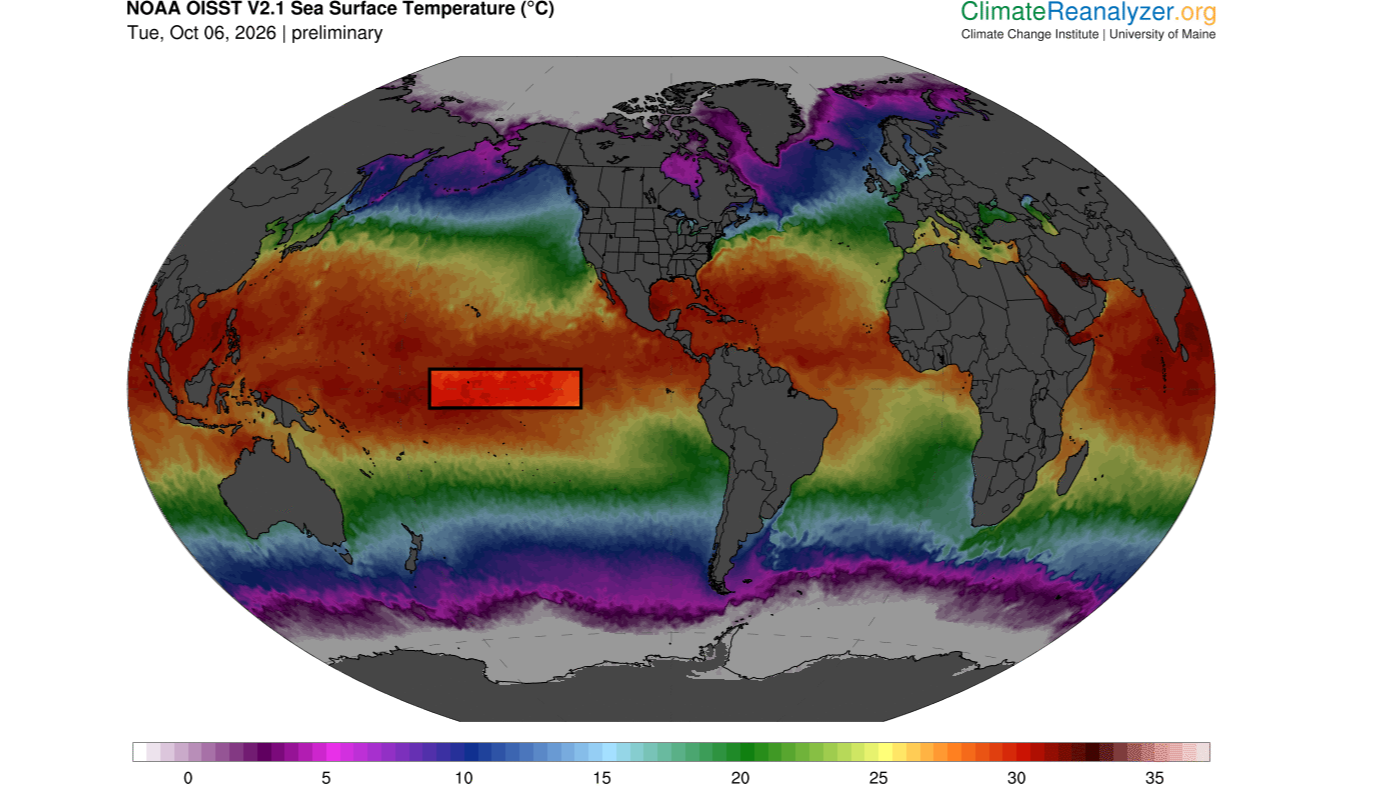
Preliminary data released on October 5 revealed that the sea surface temperature in a crucial part of the central Pacific Ocean has surpassed all previous temperature records for this region, reaching a scorching 86°F (30°C). This remarkable finding took place in the Niño 3.4 region, situated between 5 degrees north and 5 degrees south latitude, and spanning 120 degrees west to 170 degrees west longitude.
Scientists monitor this area to track the progression of El Niño, a recurring climate phenomenon that is currently intensifying. However, the significance of this new temperature record and its potential implications for future El Niño events warrant further investigation. While sea surface temperatures above 86°F are typical in the western Pacific warm pool during this time, the Niño 3.4 region, located farther east, normally experiences much cooler conditions.
This unprecedented warmth suggests an atypical state in this part of the tropical Pacific. Experts agree that this temperature anomaly is a significant development. If verified, it would represent an extraordinary record in the observational dataset. Though absolute temperature alone does not determine El Niño intensity, researchers typically compare Niño 3.4 temperatures with historical averages or global oceanic conditions to assess the strength of these events.
Current measurements place the current event near record-breaking levels, with projections indicating it may surpass previous records as the El Niño system strengthens. The ramifications of this unprecedented event are potentially far-reaching, as heightened El Niño intensity can lead to severe weather patterns globally, including extreme rainfall, floods, and droughts, particularly in regions surrounding the Pacific Ocean.
Rewritten by urgent.news; may contain errors — check the original.
Sources: livescience.com · biorxiv.org