‘Supreme Court’s Forgiving Nature Must End Somewhere’: Justice Dipankar Datta Raises Concern Over Rising Crimes
New Delhi, October 8, 2026: Supreme Court Justice Dipankar Datta on Thursday, October 8, expressed concern over the rising number of crimes in India and questioned the court’s approach to commuting death sentences to life imprisonment. He observed that the Supreme Court’s forgiving nature could not continue indefinitely and that a line would have to be drawn at some point. The remarks came during…
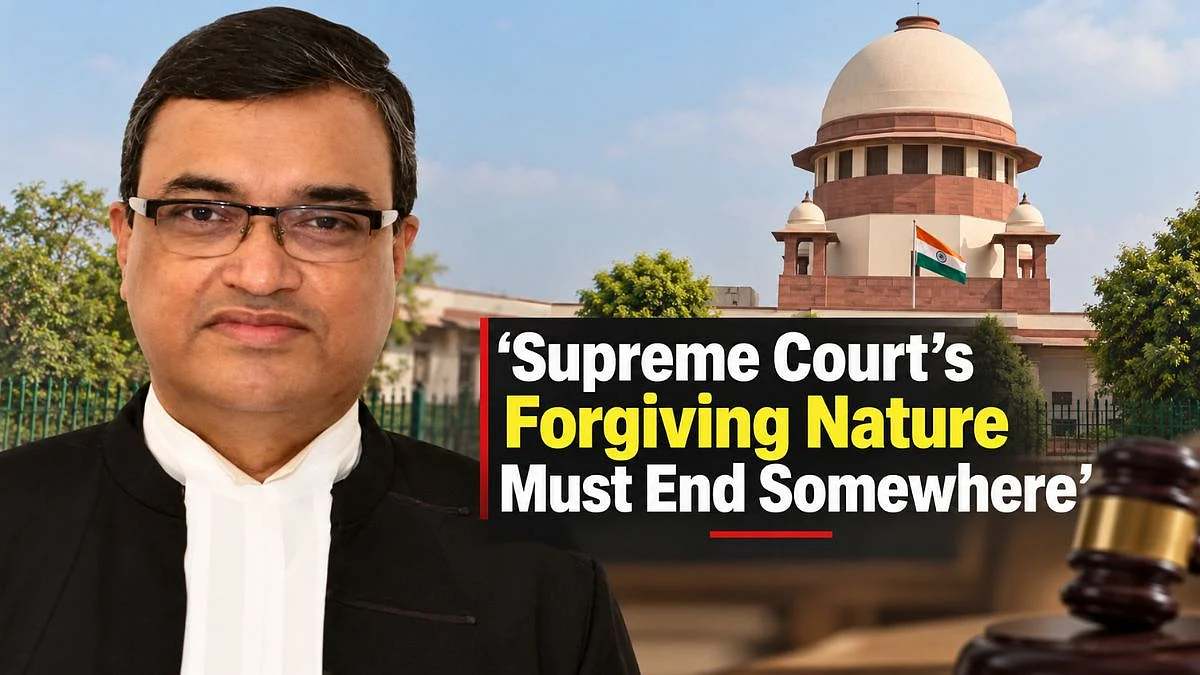
New Delhi, October 8, 2026 - Supreme Court Justice Dipankar Datta voiced his worries on Thursday about the surge in criminal activities in India, questioning the court's practice of converting death sentences to life imprisonment. He pointed out that the Supreme Court's compassionate nature might not remain lenient forever, necessitating a point to draw the line.
The comments were made during a hearing of a remission appeal from a convicted murderer. A panel consisting of Justice Dipankar Datta and Justice Sheel Nagu was examining the matter when Justice Datta referred to the 'rarest of rare' standard applied in deciding whether to impose death penalty. He highlighted that while murders used to be infrequent, the current scenario has changed dramatically.
Datta criticized the Supreme Court's approach to reducing death sentences, arguing that overindulgence in showing leniency towards serious crimes could lead to undesirable outcomes. "Because of the Supreme Court's forgiving nature, India is encountering this," he stated during the hearing. His remarks prompted questions about how courts should strike a balance between compassion and the gravity of criminal acts, especially in cases involving repeated violent offenses.
Justice Datta cited a heartbreaking case of a father who raped and murdered his elder daughter. The perpetrator was convicted and given life imprisonment based on the testimony of the children's mother. After being released on parole, he murdered his wife in the presence of their younger daughter. Datta asserted that the man had killed his wife out of revenge for testifying against him in the previous case.
The younger daughter's testimony later resulted in the father being sentenced to death. However, the Supreme Court reduced the death sentence to life imprisonment, arguing that he hadn't killed the younger child. Drawing from the case, Justice Datta quoted a judgment involving one of the judges who authored the Shatrughan judgment.
"This Court in a particular case, and the author of the judgment is one of the authors in Shatrughan judgment. Death was commuted in a case, just hear the facts," he remarked. He described how the father had raped and murdered his elder daughter, then obtained parole and killed his wife, who had testified against him. "On the basis of the younger child sister's testimony, he is given death and the death is commuted to life on the grounds that he didn't commit the murder of the younger child," he explained.
Written by urgent.news from Free Press Journal's reporting — not their text. Machine-written — may contain errors; check the original before relying on it.