Supreme Court Directs Centre To Form Panel To Curb Unethical Pharma Marketing Practices
New Delhi, October 8, 2026: The Supreme Court on Thursday, October 8, directed the Centre to constitute a committee to recommend measures to curb unethical marketing practices by pharmaceutical companies, including offering gifts and other benefits to doctors. A bench of Justices Vikram Nath and Sandeep Mehta passed the order while hearing a petition seeking stricter regulations on pharmaceutical…
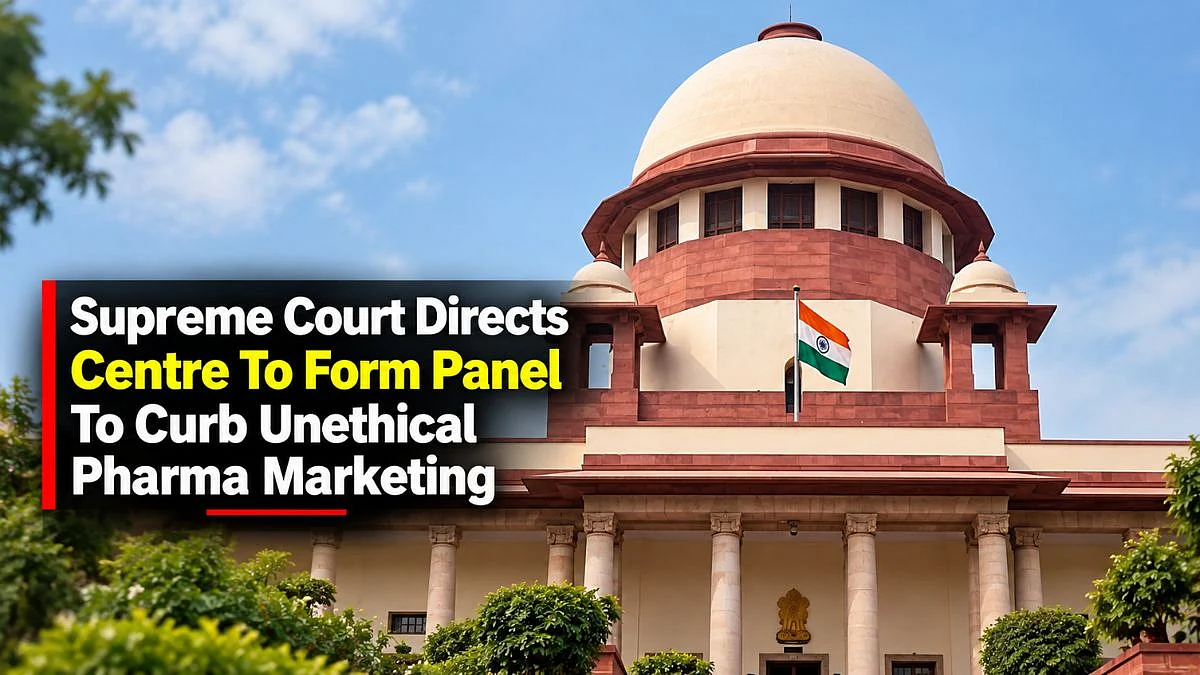
New Delhi, October 8, 2026 - The Supreme Court has mandated the Central Government to establish a committee tasked with proposing solutions to mitigate unethical marketing practices in the pharmaceutical industry, specifically concerning the provision of gifts and other incentives to medical professionals. The decision came during a hearing of a petition that advocated for more stringent regulations on pharmaceutical corporations.
The bench comprising Justices Vikram Nath and Sandeep Mehta issued the directive while deliberating the petition seeking guidelines to prevent illicit marketing methods until the government enacts a comprehensive law. The government was instructed to submit a compliance report, and the next hearing is scheduled for January 29.
The petitioners contended that the committee would review suggestions and proposals, after which it would recommend measures to the government. The court also mandated the submission of a compliance affidavit by the central authorities and set the subsequent hearing for January 29. Earlier, the government had informed the court that a three-member committee would be formed to evaluate whether a statutory framework was essential to regulate pharmaceutical firms and the nature of such regulations.
Solicitor General Tushar Mehta had requested a two-month timeframe for the committee to draft its report, which would subsequently be presented to the court for approval.
The Supreme Court expressed skepticism regarding the Uniform Code for Pharmaceutical Marketing Practices (UCPMP), 2024, questioning its capacity to prevent unethical practices effectively. The court also criticized the lack of government oversight over the code, highlighting the potential for a legally mandatory code to function de facto voluntarily without robust enforcement.
Solicitor General Mehta referenced the Centre's affidavit filed on August 17, 2026, detailing interactions between the Department of Pharmaceuticals, Department of Health and Family Welfare, and Department of Legal Affairs. He acknowledged that the existing regulatory framework includes disciplinary actions against doctors who accept gifts, travel arrangements, hospitality, or monetary grants from pharmaceutical firms.
However, the government recognized the necessity to enhance mechanisms to prevent pharmaceutical companies from engaging in unethical practices themselves. The committee would deliberate on the adequacy of the current regulatory framework in place. Petitioners questioned the formation of another committee, arguing that a high-level committee had already been established in a 2022 affidavit to assess the necessity for a legally enforceable mechanism.
They emphasized that while the current regulatory framework penalizes doctors for accepting benefits, it lacks the corresponding statutory measures to penalize pharmaceutical companies offering such inducements. This imbalance, according to the petitioners, enables pharmaceutical companies to exert undue influence over doctors' prescribing decisions.
The petitioners also cited the Supreme Court's 2022 judgment in Apex Laboratories Pvt Ltd v Deputy Commissioner of Income Tax, which underscored the fiduciary relationship between doctors and patients. The judgment cautioned about the potential for benefits provided by pharmaceutical companies to sway prescribing practices, describing the practice as engendering a "publicly injurious cycle."
The court's earlier remarks in this case indicate a significant concern in pharmaceutical regulation: while disciplinary actions can be imposed on doctors for accepting benefits, the need for corresponding penalties against companies offering such incentives remains unaddressed within the regulatory landscape. The committee’s recommendations will be pivotal in determining whether the existing regulatory framework requires enhanced legal enforcement to ensure pharmaceutical companies are held accountable for unethical marketing practices.
Written by urgent.news from Free Press Journal's reporting — not their text. Machine-written — may contain errors; check the original before relying on it.