Pioneering molecular reaction duo win Nobel Prize in Chemistry
Henri Kagan and Kenso Soai were recognised for the discovery of non-linear effects and autocatalysis in asymmetric organic synthesis. Read more: Pioneering molecular reaction duo win Nobel Prize in Chemistry
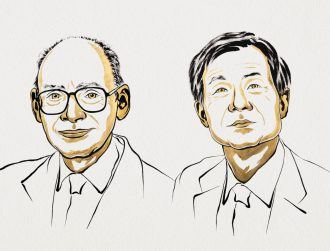
Henri Kagan and Kenso Soai, a French and a Japanese scientist respectively, have been awarded the Nobel Prize in Chemistry 2026 for their groundbreaking discoveries in asymmetric organic synthesis. Their work has been instrumental in the design of chemical reactions for the production of pharmaceuticals, flavours, scents, and new materials.
The Royal Swedish Academy of Sciences (RSAS) recognised the duo for their discovery of non-linear effects and autocatalysis in asymmetric organic synthesis, which laid the foundation for understanding the phenomenon of 'homochirality'. This phenomenon explains why some molecules, like amino acids, exist in only one form that is the mirror image of the other.
Henri Kagan's research in the 1980s focused on manipulating chemical reactions to generate a larger excess of one molecular mirror image, a remarkable achievement that was previously thought impossible. In 2003, Kenso Soai followed up with the design and execution of the first chemical reaction that selectively formed one of the potential mirror images. This reaction, known as the 'Soai reaction', has been hailed as one of the most remarkable chemical experiments ever conducted by the RSAS.
The Nobel Committee for Chemistry commended Kagan and Soai for solving a chemical mystery that has lingered for over a century, shedding light on how homochirality can emerge spontaneously. Their innovative chemical reactions have been hailed as spectacular, providing invaluable insights into the mechanisms of reaction. Understanding these mechanisms is vital for the prediction, control, and design of new reactions, a concept that extends far beyond the boundaries of organic chemistry.
Kagan, born in France in 1930, and Soai, born in Japan in 1950, will share a prize of 12 million Swedish kronor (€1.07m). The Nobel Prizes in Physiology or Medicine and Physics were also recently awarded to scientists from the US, Germany, and Belgium, respectively.
Written by urgent.news from Silicon Republic's reporting — not their text. Machine-written — may contain errors; check the original before relying on it.