Optogenetic therapy shows promise for vision restoration
Researchers report encouraging findings from the first clinical cohort of blind people treated with optogenetic therapy The post Optogenetic therapy shows promise for vision restoration appeared first on Physics World .
Retinitis pigmentosa is a degenerative eye condition that damages photoreceptor cells and can ultimately cause blindness. In a recent clinical trial, an international team of researchers demonstrated that optogenetic therapy is safe and may offer hope for restoring visual function in patients with advanced stages of this disorder. The study, published in the New England Journal of Medicine, involved 10 participants with blindness caused by retinitis pigmentosa.
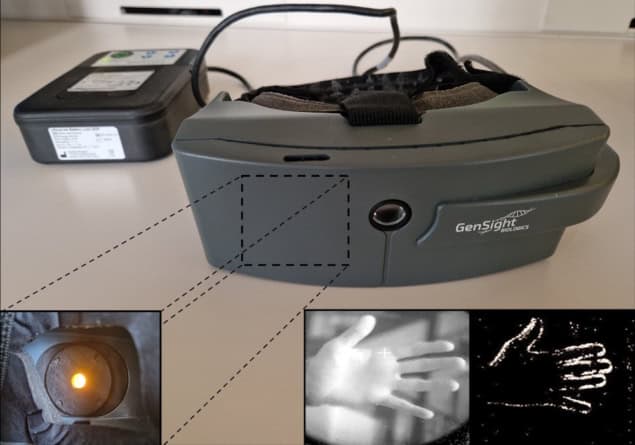
Optogenetics is a technique that utilizes light to control and study the activity of specific cells in the brain. In this case, the therapy combines gene therapy to make surviving ganglion cells (neurons in the retina) sensitive to light with specialized goggles that stimulate these altered cells. According to Dr. José-Alain Sahel, the study's lead author and director of the UPMC Vision Institute, many other retinal cells can remain intact years after vision loss.
Optogenetics allows researchers to introduce a light-sensitive protein into these cells, enabling them to respond to light and transmit visual information to the brain.
During the study, participants were injected with a gene that produces ChrimsonR – a light-sensitive protein that responds most strongly to amber light. The researchers administered the therapy in three different dose levels, with each participant receiving between 5.0 x 10^10 and 5.0 x 10^11 vector genomes per eye. The primary goal was to evaluate the safety of the optogenetic therapy.
Of the 10 participants, 9 experienced mild to moderate ocular adverse events, such as temporary inflammation and increased eye pressure. One severe event occurred, but it resolved quickly after treatment. The researchers concluded that the treatment was safe within the limits of the study.
To assess the visual performance of the treated eyes, the researchers used specialized goggles that converted visual information into patterns of light, which were then projected onto the retina. The goggles contained a camera that detected changes in light intensities and converted this data into pulses of amber light. Vision tests revealed that the therapy increased light sensitivity in 7 out of the 10 participants, with improvements ranging from 2.0 to 62.3 times normal sensitivity. Six patients demonstrated clinically meaningful improvements in visual function.
In addition to vision tests, the participants completed tasks to detect, localize, and touch objects like a notebook and a staple-box. With the goggles, five out of eight participants showed higher accuracy in the notebook task, and four showed improved accuracy in the staple-box task. The researchers also performed electroencephalographic (EEG) recordings in 5 patients performing two visual tests, which showed increased EEG decoding accuracy when the participants wore the goggles, particularly when their eyes were open.
While the changes in visual performance were modest and did not restore normal sight, the researchers noted that the improvements were consistent across multiple tasks and testing sessions. They also pointed out that better performance in visual behavioral tests was associated with longer training periods using the goggles. Further research is ongoing to enhance the technology, including the development of digital holographic goggles with an eye tracker capable of stimulating individual cells in the retina.
Written by urgent.news from Physics World's reporting — not their text. Machine-written — may contain errors; check the original before relying on it.