It's a bird, it's a plane...well, more of a spinning parachute, but really it's a droppable robot boat
The ALBATROSS has landed
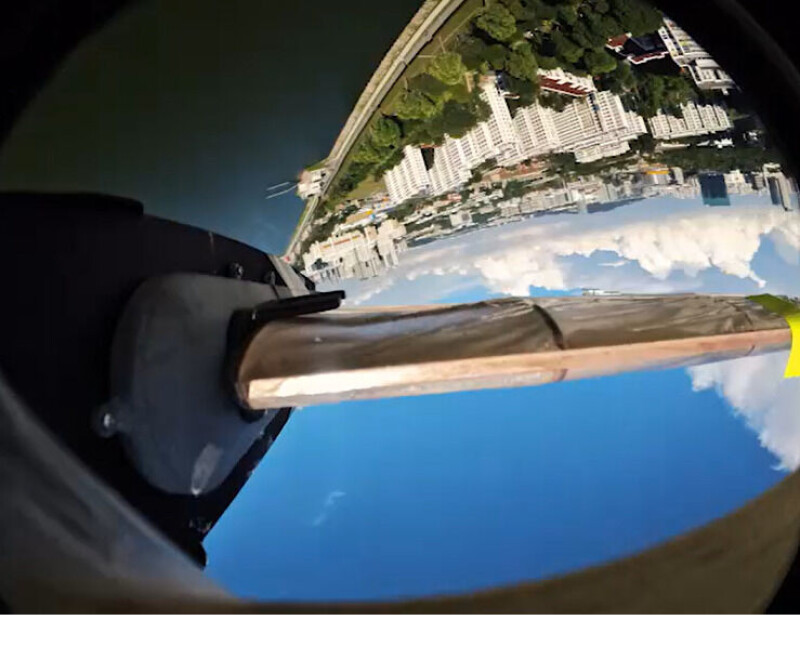
The ALBATROSS, a prototype sailboat drone created by researchers at Singapore University of Technology and Design, may not soar through the skies like a majestic albatross but rather, it descends with a spin akin to a maple seed. This unique design helps it slow its descent and reduces the impact upon hitting the water, tackling the challenge of managing dual mobility modes.
The boat drone, weighing just 1.107 kg, is a hybrid robotic system that merges bio-inspired design for controlled aerial descent with autonomous sailing. It features rigid wingsails for generating aerodynamic lift and propulsion on water, and a rudder functioning much like a tailfin, moving side to side to generate thrust. The ALBATROSS, constructed with just three actuators and three main sensors, is developed to be dropped from an aircraft, autonomously enter autorotation for a gentle water landing, right itself without assistance, and switch seamlessly into a wind-powered sailboat.
This design offers a cost-effective alternative to large automated sailboats like Saildrone and Sailbuoy, and boasts a greater deployment range. The team behind ALBATROSS includes Shane Kyi Hla Win, Danial Sufiyan, Brian Leonard Suhadi, Luke Soe Thura, Xinyu Cai, Wei Jun Ang, and Shaohui Foong. This innovative drone is part of an emerging market, with a projected value of €18.9 billion ($21.2 billion) by 2030, driven by civilian applications such as scientific research, commercial, recreational, and search and rescue operations.
Written by urgent.news from The Register Science's reporting — not their text. Machine-written — may contain errors; check the original before relying on it.
This story
This is one outlet's version. Read the fullest account.