Hazy math: DoE explains why your AQI says 250 when the official API is 175
KUALA LUMPUR, Oct 8 — The Department of Environment (DOE) has clarified that higher air quality figures displayed on ind...
The Department of Environment (DOE) has explained why independent air quality apps and websites often show higher figures than Malaysia's official API. This discrepancy arises because these third-party platforms use different scales, models, thresholds, averaging times, update rates, and sensors. Many international apps follow the US AQI standard or use low-cost, uncalibrated sensors, predictive algorithms, or satellite imagery.
However, satellites measure aerosol density in the upper atmosphere, not local air quality, which can lead to misinterpretation as particulate haze.
The DOE emphasized that direct comparisons between platforms require matching geographic locations and timestamps, using the same pollutant measurements, and adhering to the same indexing methods. For accurate health advisories and disaster response, the DOE recommends consulting verified data from the Air Pollutant Index Management System (APIMS) web portal or the MyJAS EQMS mobile app. These platforms update hourly and are the government's official benchmark for air quality.
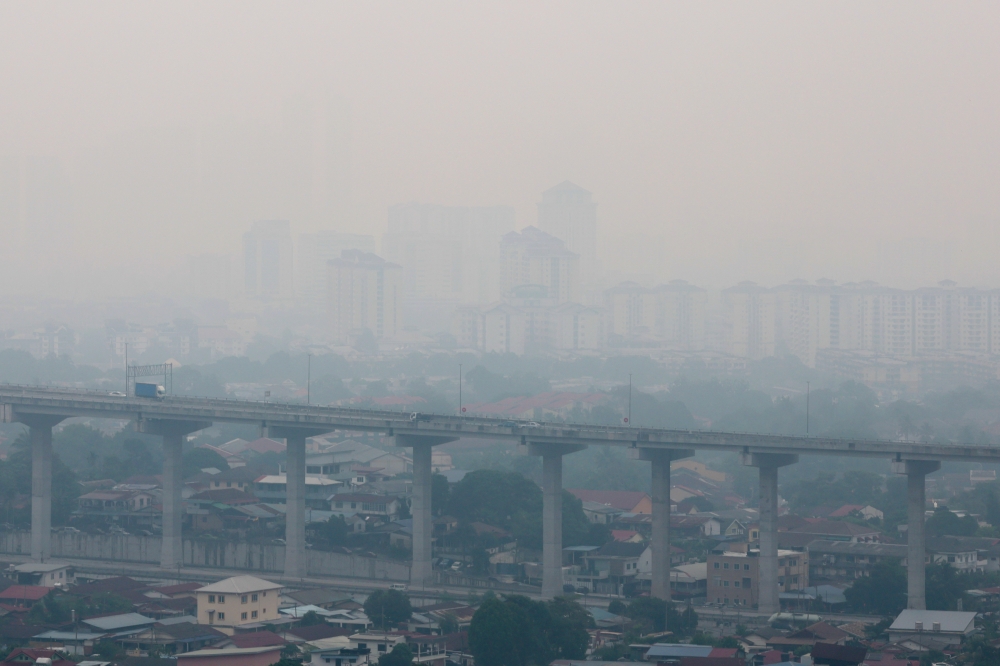
As of 3 PM on October 8, 38 areas in Malaysia recorded unhealthy air quality. Southern and central states experienced the most severe pollution, including Segamat (190), Seremban (186), Nilai (185), and Kluang (181). Rompin in Pahang and Johan Setia in Selangor also showed high readings at 178. Putrajaya's API reached 175, while most monitoring stations nationwide were in the moderate (30 stations) or unhealthy (38 stations) categories.
Across the Greater Klang Valley, Cheras (174), Shah Alam (171), and Petaling Jaya (165) were among the areas with elevated readings.
The department linked the worsening air quality to prolonged dry spells in the southern ASEAN region. According to the Asean Specialised Meteorological Centre (ASMC), 210 fire hotspots were reported in Sumatra and 94 in Kalimantan on October 7, accompanied by transboundary smoke plumes drifting across central and southern Sumatra, Singapore, and southern Peninsular Malaysia.
Rewritten by urgent.news; may contain errors — check the original.
Source: malaymail.com