Goodbye, Singapore Girl sandals: SIA cabin crew to get new closed-toe wedge shoes
SINGAPORE, Oct 8 — Singapore Airlines will begin rolling out new closed-toe shoes for its female cabin crew in Jan...
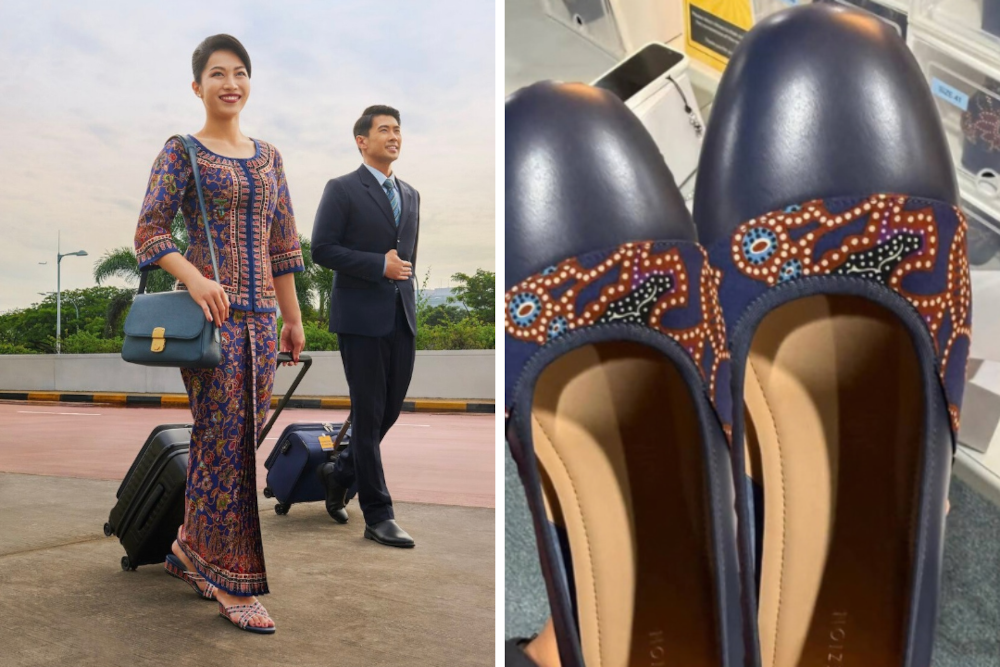
Singapore Airlines will begin transitioning its female cabin crew to new closed-toe wedge shoes in January, replacing the previously worn open-toed sandals. This change follows a review conducted by the airline, focusing on safety, comfort, support, and operational requirements. The new shoes, created in collaboration with local brand PAZZION, showcase a closed-toe design, genuine leather material, and SIA's signature batik print.
The colors of the shoes will correspond with each crew member's rank, with burgundy reserved for Inflight Managers.
The new design incorporates thick lambskin insoles and was tested during actual flights before being finalized. Unlike the outgoing sandals, the closed-toe shoes will be worn throughout the duration of each flight, eliminating the need for crew members to switch footwear during take-off, landing, and the rest of the journey. The outgoing sandals were emblematic of the airline's "Singapore Girl" image, featuring batik detailing and red toenails, which were a key element of SIA's visual identity since the 1970s.
These shoes have also been an integral part of the airline's sarong kebaya uniform, originally designed by French designer Pierre Balmain for Malaysia-Singapore Airlines in 1968 and later adapted by SIA.
The transition to closed-toe shoes was not directly linked to the 2000 Singapore Airlines Flight SQ006 crash, which resulted in 83 fatalities. However, the airline had been working on the footwear change for over two years prior to the accident. The new shoes will gradually replace both the closed-toe slingbacks and the open-toed sandals, with SIA stating that the change aims to enhance practicality and consistency in the uniform.
Male cabin crew, who have been wearing black leather shoes, will not be affected by this alteration.
Written by urgent.news from Malay Mail's reporting — not their text. Machine-written — may contain errors; check the original before relying on it.