From WIL to the real world: How industry experience can shape SA’s next generation of tech talent
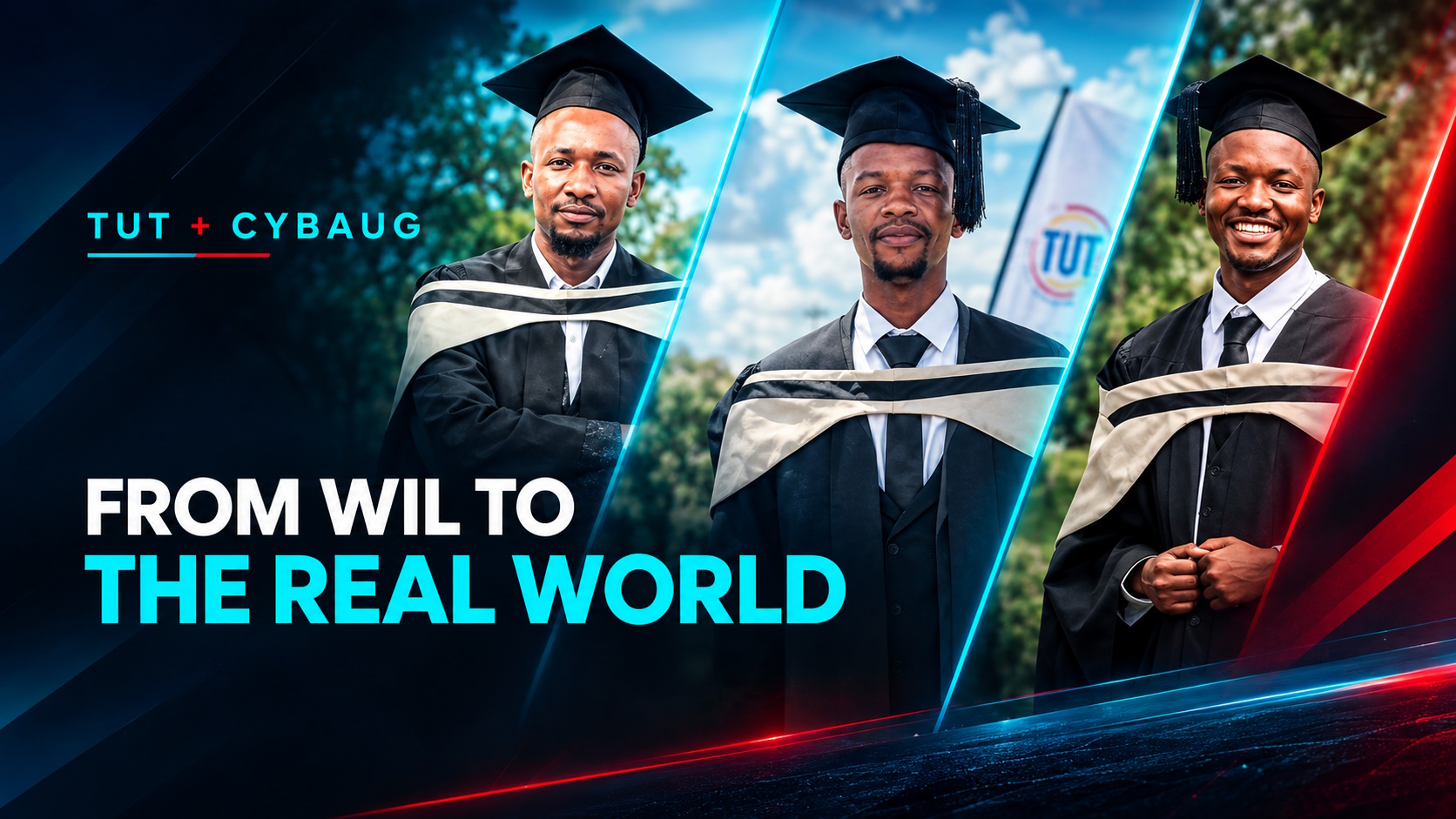
Three students who completed their work integrated learning journey with CYBAUG have now graduated from TUT.
Graduation is often seen as the end of a journey, but for aspiring technology professionals, it should mark the beginning of a new chapter. Work integrated learning (WIL) is crucial for bridging the gap between academic knowledge and real-world application. CYBAUG's partnership with Tshwane University of Technology (TUT) exemplifies this approach.
The company invited emerging technology professionals to work on a live product, collaborate with experienced engineers, and gain insight into developing technology for actual users. Three graduates from TUT who completed their WIL at CYBAUG have now graduated, but their achievement signifies something more significant. It illustrates the impact of aligning higher education with industry to create meaningful pathways for students.
The distinction between learning about technology and building it lies in the complexities of real-world production systems. While students can grasp programming, databases, and security principles in a classroom, the actual production environment requires a different skill set. Security must be considered from the outset, code must be maintainable by others, and technology must solve tangible problems for users.
Through their WIL experience at CYBAUG, these students encountered these realities while contributing to TymiQ, a workforce intelligence platform. TymiQ addresses the challenge of timekeeping through biometric verification, GPS, geofencing, and offline-first capabilities. This exposure to an evolving product with real requirements, constraints, and consequences is invaluable.
For students, this experience is unlike any classroom scenario. It fosters accountability, collaboration, version control, documentation, security, testing, problem-solving, and the discipline of delivering to specifications. CYBAUG recognizes that simply producing more code writers is not enough. The country needs individuals who can understand systems, identify problems, engineer solutions, and take responsibility for their technological creations.
South Africa lacks intelligent young people, but rather, it needs environments where their intelligence can be transformed into practical capabilities. Universities provide the foundation, while industry offers a unique educational experience. CYBAUG's partnership with TUT has reinforced its belief that industry collaborations should focus on outcomes.
Students should learn about professional teamwork, develop stronger technical and professional skills, and gain the confidence to contribute to the technology industry. The graduates leaving CYBAUG with university qualifications and WIL experience represent a significant milestone for the company. However, the true test lies ahead.
As the technology industry evolves with artificial intelligence, cyber threats, efficiency demands, and new product opportunities, the professionals who succeed will be those who can adapt, question, engineer, and continue building. WIL is not merely a graduation requirement; it is a bridge connecting education and economic participation.
It serves as a pipeline for the technology industry, allowing young people to tackle meaningful problems and contribute to shaping the future they are entering.
Written by urgent.news from ITWeb's reporting — not their text. Machine-written — may contain errors; check the original before relying on it.