'Freakish' discovery of 9 million-year-old capybara tooth supports idea that Atacama wasn't always a desert
A 9 million-year-old capybara tooth was found in the Atacama Desert, a surprising find given that these rodents love water.
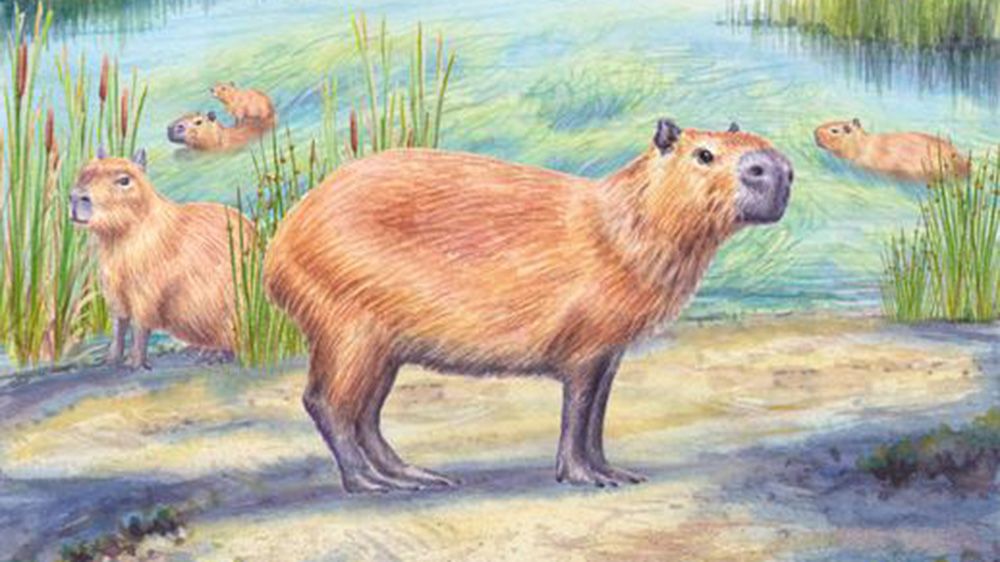
Researchers have unearthed a 9 million-year-old capybara tooth in the Atacama Desert of northern Chile, challenging the notion that the region was always a desert. The fossilized molar, belonging to an extinct capybara relative, adds to evidence suggesting that the Atacama, one of the driest places on Earth, was not continuously dry for the last 40 million years.
The Atacama Desert, the oldest desert on Earth, is bordered by the Chilean Coast Range and the Andes Mountains, which block rain from the Pacific and Atlantic Oceans, respectively. The hyperarid core of the desert began forming between 47.8 million and 33.9 million years ago, contradicting the idea that mountain ranges caused the desert's aridification.
Capybaras, the world's largest rodents, exclusively live near stable freshwater sources and consume water-dependent plants, making the discovery of their tooth in the Atacama desert highly unusual. The tooth was found in a layer containing the remains of a shallow marine environment between 7 and 10 million years ago, along with microscopic plant fragments indicating the presence of palm trees, grasses, and other flowering plants in a subtropical forest.
The researchers are unsure how the capybara migrated to the Atacama, but they believe the ancient rodents followed wetlands, rivers, and other water sources along the western coast of South America. The discovery supports the hypothesis of a sporadically moist Atacama, as capybaras, as semi-aquatic animals, would have thrived in such an environment.
Written by urgent.news from Live Science's reporting — not their text. Machine-written — may contain errors; check the original before relying on it.


