Euro: Der Frankreich-Schock weckt düstere Erinnerungen
Investoren flüchten aus dem Euro – Pessimisten fürchten eine Wiederholung der Euro-Krise vor 15 Jahren. Andere setzen darauf, dass Investoren und EZB dazugelernt haben.
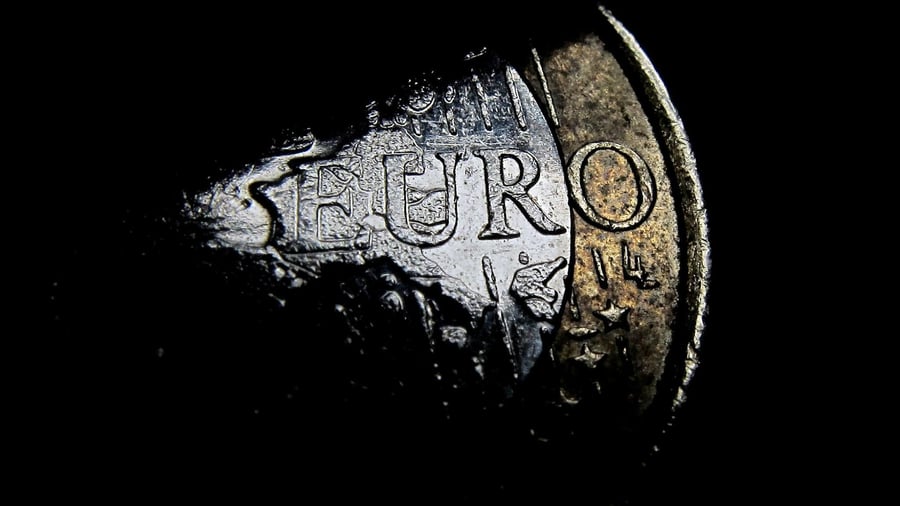
The sudden surge in bond yields has left investors unsettled, as evident in the foreign exchange market. In the aftermath of the France shock, the euro has momentarily plummeted to its lowest point in 17 months against the dollar. Even days later, it remains difficult for the common currency to recover, with investors shunning the euro.
Analysts are drawing comparisons to the euro crisis of 2011/12, where tensions escalated over months before being quelled by a single statement from Mario Draghi, president of the European Central Bank (ECB). "There was a possibility of the single currency collapsing back then, and today a sense of crisis is building up in the bond market," warns investment strategist Mark Dowding of RBC Bluebay Asset Management.
Eckhard Schulte of Mainsky Asset Management sees a crucial difference this time: "Today there is no Mario Draghi." Consequently, he fears potential intervention from the ECB to stabilize the situation, as well-informed economists are concerned. Ifo's chief, Clemens Fuest, fears a return of the euro crisis with more challenging circumstances: a debt crisis in the second-largest Euro country and higher inflation.
This diminishes the ECB's room for maneuver. Professor Lars Feld stresses how much depends on who succeeds ECB chair Christine Lagarde. Vincenzo Vedda, Chief Investment Officer at Deutsche Bank's subsidiary DWS, believes the parallels to the 2011 crisis are manageable. "Markets and institutions have gained experience," he says. "We do not expect a lasting contagion."
Vedda remains confident in his forecast that the euro should gain against the dollar within 12 months. Commerzbank expert Christoph Rieger agrees that contagion effects are currently less severe than in the Greek case 15 years ago. The ECB's toolbox has expanded, and market participants trust that the central bank will use it in emergencies.
This reduces the risk of a euro crisis. France's central bank chief Emmanuel Moulin dampens expectations. He says the situation is serious, but conditions for ECB intervention are not yet met, he said on France Inter radio on Wednesday. Rieger believes it is prudent for the ECB not to act hastily in the market, even if it means the crisis could flare up again in the bond market.
For Christian Kopf, an analyst at Union Investment, the Euro Zone has at least faced a test for now. The sudden devaluation of the euro is an indicator that the entire Euro Zone is suffering, but the outflows from the monetary union have been contained. Market reactions have been severe, but they are short-lived and orderly, according to Kopf.
The weakness of the euro is partly due to justified concerns about the fiscal situation, but the driving force in foreign exchange markets is the shift to rising interest rates in the United States. The Federal Reserve (Fed) raised its benchmark interest rate in September after a pause of nine months. Futures markets are pricing in further moves.
Higher yields attract investors to the largest economy in the world, even though increasing fiscal concerns are growing in the U.S. too: "The dollar is not only rising against the euro, but broadly against a variety of currencies," Kopf notes. More than the Euro Zone, Switzerland feels the impact. As the last enclave with a zero interest rate, the Swiss National Bank (SNB) has kept its rate at 0.0 percent since mid-2025, after temporarily raising it to 1.75 percent in response to global high inflation.
Switzerland is considered one of the safest havens for investors on global financial markets, thanks to low debt, low inflation, and a strong currency. However, the SNB is finding it increasingly difficult to avoid the steep rate hikes in Europe and the U.S. As the Iran war progresses, the franc has lost more than eight percent against the dollar and just under four percent against the euro.
If the Fed and ECB continue to raise rates, the SNB must also act to stabilize the franc. Economists at UBS, Allianz Global Investors, and asset manager Bantleon expect rate hikes in the coming quarters. A persistently weak franc could increase import prices and spur inflation. This is now also a problem for the ECB. The acute euro weakness comes at a strategic disadvantage, as bond market turbulence escalates, causing the central bankers to hesitate and risk further worsening the situation. A rate hike in late October appears unlikely, making a December move at least questionable.
Written by urgent.news from Handelsblatt's reporting — not their text. Machine-written — may contain errors; check the original before relying on it.