End ‘wholesale restrictions’ on Chinese EVs in US, experts say
The United States should engage with Chinese carmakers and battery manufacturers “strategically”, using targeted safeguards instead of the current “wholesale restrictions”, which could lead US carmakers to lose global market share, according to experts. “We need to consider strategic partnerships,” said John Helveston, an associate professor at George Washington University, during a discussion on…
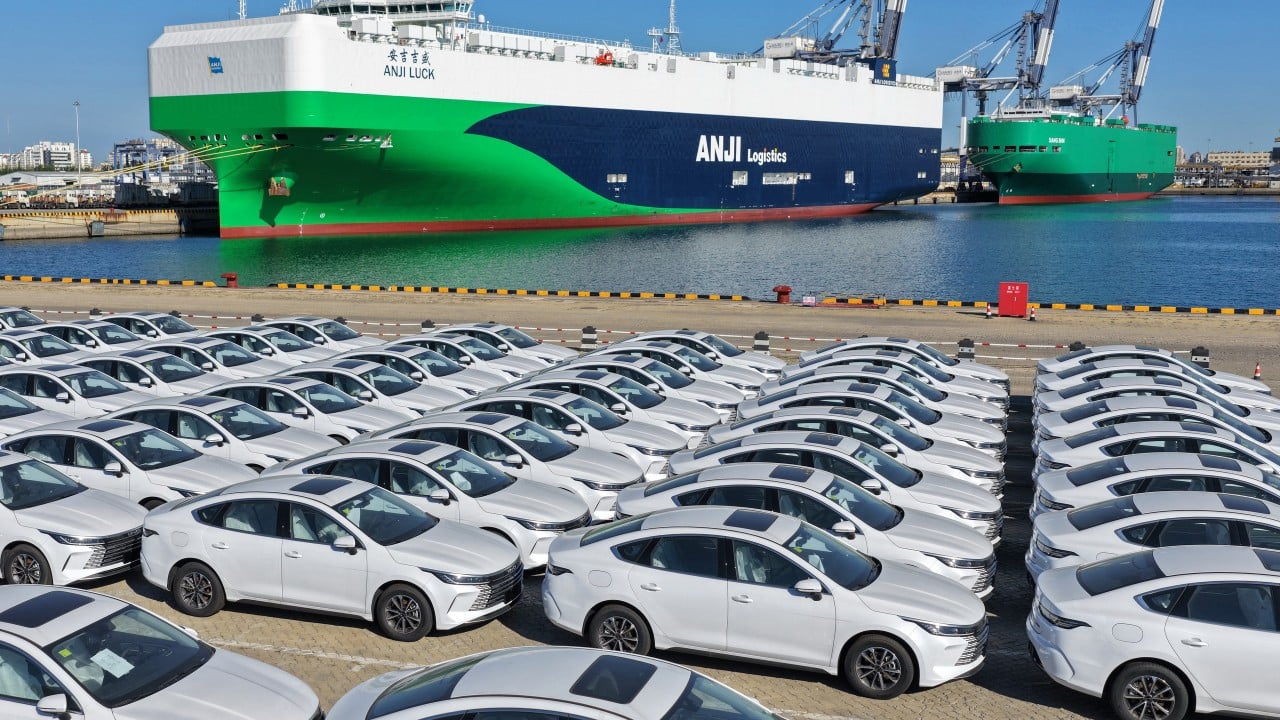
Experts argue that the United States should adopt a strategic approach towards engaging with Chinese automakers and battery manufacturers, rather than implementing blanket restrictions. John Helveston, an associate professor at George Washington University, advocates for strategic partnerships, including licensing agreements and targeted safeguards, to prevent US carmakers from losing global market share.
Sourabh Gupta, a resident senior fellow at the Institute for China-America Studies, warns that protectionism in a competitive market is an "act of severe self-harm." They both emphasize the need for targeted safeguards instead of wholesale restrictions, which could stifle US automakers' global competitiveness. Differences between Washington and Beijing over potential investments stalled during President Xi Jinping's state visit to Washington, raising concerns among Congress and US carmakers.
The disagreements over the Board of Investment, a result of the May summit, also contributed to the blockage. Despite the US fact sheet mentioning the investment board from May, the Chinese readout did not include it. China's dominance in EV sales globally is a significant factor, with China selling more EVs than the US sold all vehicles last year.
Experts highlight that Chinese carmakers' strengths lie in their integrated and intelligent manufacturing ecosystem and creative remodelling of car interiors. BYD, for example, saves US$2,369 per car through vertical integration and has lower overheads due to local R&D. Helveston points to the Rhodium Group report showing BYD Seal's per-car cost advantage over Tesla Model 3 is just US$304, with the main differences coming from vertical integration and lower overheads.
He stresses that banning Chinese EVs does not guarantee security, as every connected car poses cybersecurity risks. Helveston cites Tesla's compliance with targeted rules, such as storing data in China and using Baidu Maps, as an example. He suggests that the US should keep North America integrated, avoid imposing tariffs on Canada and Mexico, and establish clear security standards instead of blanket bans.
Helveston urges bipartisan support for recognizing EVs as the future of the auto industry, not merely an environmental technology, and calls for incentivizing them until they reach maturity.
Written by urgent.news from South China Morning Post's reporting — not their text. Machine-written — may contain errors; check the original before relying on it.
This story
This is one outlet's version. Read the fullest account.