El Niño speeds climate crisis and tests Latin America’s food security
From droughts to floods and fires, El Niño is exposing vulnerabilities in Latin America’s food systems by putting farmers, food supplies and household budgets under growing pressure across the region.
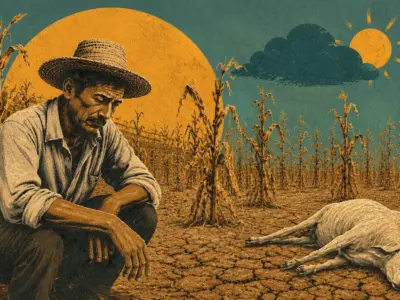
Latin America faces a worsening food security challenge due to the intensifying El Niño climate pattern. In Bolivia, a municipality declared a disaster zone due to a heavy snowfall buried hundreds of animals, highlighting the extreme consequences. This phenomenon, known as El Niño–Southern Oscillation (ENSO), causes extreme temperatures or rainfall shortages, leading to crop losses in rural areas where farming is the primary livelihood.
According to the 2026 State of Food Security and Nutrition in the World report, 25.8% of the global population experienced moderate or severe food insecurity in 2025. In Latin America, small-scale family farmers, including Indigenous communities, are the backbone of food production, but they face significant risks from El Niño. The phenomenon, characterized by El Niño, La Niña, and the transition phase, has intensified over time, affecting regions like Central America, the Caribbean, and northern South America.
Experts warn of increased droughts, water shortages, heat waves, and extreme rainfall, causing crop failures and higher food prices. While hunger levels have declined, they remain fragile and uneven, with Latin America being an exporting region with the highest cost for a healthy diet, often beyond the income of millions. To address this, efforts should focus on tackling inequality, improving social mobility, and promoting healthier diets.
Written by urgent.news from Global Voices Colombia's reporting — not their text. Machine-written — may contain errors; check the original before relying on it.