Discos’ sell-off faces investor trust deficit
ISLAMABAD: To attract bidders for the successful privatisation of distribution companies (Discos) and allay concerns about contract sanctity, the government is expediting measures to improve regulatory predictability and considering political risk guarantees from multilateral agencies. Informed sources told Dawn that the reopening of independent power producers’ (IPPs) contracts and recent legal…
Islamabad: In a bid to entice bidders for the privatisation of distribution companies (Discos) and quell worries about contract stability, the government is accelerating steps to enhance regulatory predictability and exploring political risk guarantees from international bodies. Reports from informed sources suggest that the reopening of Independent Power Producers' (IPPs) contracts and recent legal proceedings involving K-Electric have increased risk perceptions among both local and foreign bidders evaluating the initial set of Discos.
They underscore the necessity of enforceable legal assurances and transparent financial risk distribution to avert post-privatisation contractual conflicts, while also advocating for extended licence periods beyond the current 20-year limit for Discos. Complicating matters, Muhammad Ali, the prime minister's advisor on privatisation, who played a role in renegotiating contracts with IPPs during both the PTI and PML-N governments, now encounters inquiries from prospective investors regarding regulatory and contractual assurances.
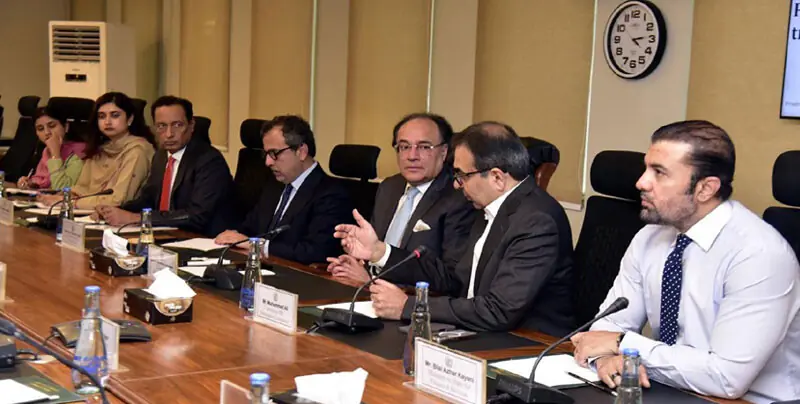
Amid these concerns, Finance Minister Muhammad Aurangzeb convened a meeting of the Steering Committee on Power Sector Regulatory Regime and Reform Options on Wednesday to push for reforms aimed at bolstering the power sector's regulatory structure and fostering efficiency, investment, competition, and private-sector involvement.
The finance minister highlighted that the evolving power sector milieu necessitates a regulatory framework that can adapt to technological advancements while fostering efficiency, investment, consumer welfare, and private-sector involvement, according to an official statement. The meeting took place in tandem with a Sindh High Court stay order on the National Electric Power Regulatory Authority (Nepra) and its tribunal's recent decision regarding K-Electric's Multi-Year Tariff (MYT), which curtailed the federal government's subsidy to KE by approximately Rs200 billion.
Displeased with the tribunal and Nepra's decision, KE appealed to the Sindh High Court, which suspended the notifications and orders and scheduled a new hearing date for October 15. The committee, chaired by the finance minister, deliberated on Pakistan's power sector metamorphosis and the substantial transformations occurring within the industry, encompassing the expansion of solar power and shifting demand patterns.
The discussion encompassed significant structural and emerging challenges, such as legacy capacity duties, evolving grid-demand trends, service quality, investment impediments, and the imperative to fortify incentives for efficiency. The minister called for the establishment of a market framework that offers clearer incentives for efficiency and service quality, while expanding competition, private-sector participation, and investment opportunities.
Written by urgent.news from Dawn Business's reporting — not their text. Machine-written — may contain errors; check the original before relying on it.