Digital sovereignty has become Europe’s top priority — here's how open source is helping pave the way
Linux Foundation leaders say open source could play a key role in digital sovereignty.
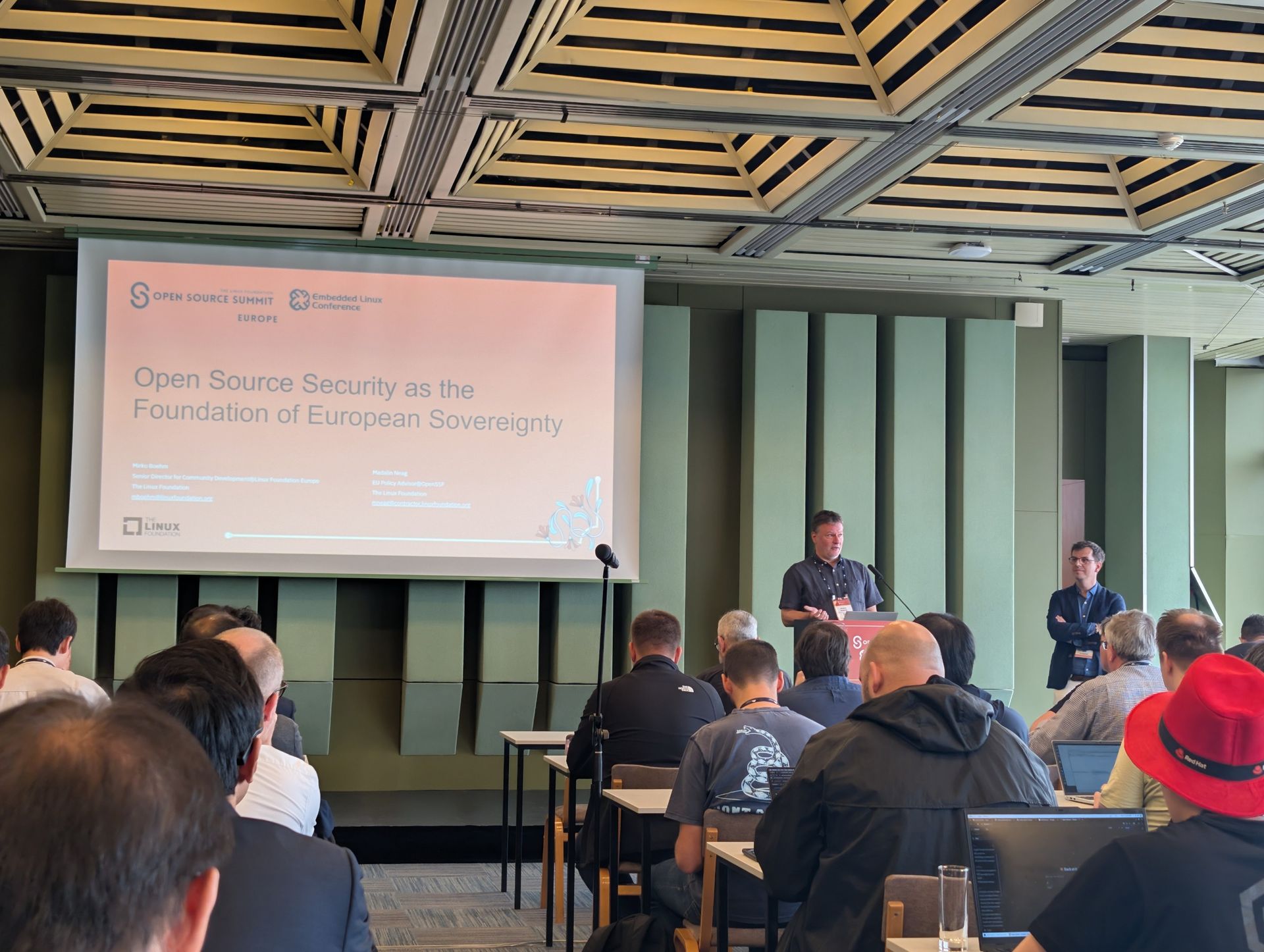
Digital sovereignty in Europe has become a strategic priority, with open source software (OSS) seen as the continent's solution. At the Linux Foundation's Open Source Summit Europe, Madalin Neag and Mirko Boehm explained that various European technology initiatives converge on solving one problem: securing software supply chains.
The global technology race is led by the US and China, but Europe feels sidelined without a strong presence. The European Commission has launched a new technological sovereignty package, including the Chips Act 2.0, Cloud and AI Development Act, and an EU Open Source Strategy. The latter aims to support open-source initiatives in various sectors, with an estimated €2 billion investment over seven years.
While digital sovereignty might seem to imply isolation, the EU aims to empower European organizations to choose, inspect, maintain, and replace technologies instead of being locked into foreign-controlled systems. Building and running advanced AI requires significant resources, creating a risk that Europe's critical digital infrastructure could become dominated by foreign technology.
The EU estimates that expanding data center capacity by 2036 will require €200 billion, alongside €100 billion for cloud and AI initiatives. Open source software is viewed as an alternative route to reduce European strategic exposure. Businesses should engage actively with open-source communities, identify critical dependencies, contribute fixes, and provide financial support.
This approach can yield significant returns, such as 3.3 times the cost of suggested code contributions. The EU's sovereignty push aims to change procurement and supply-chain risk management, emphasizing dependency transparency, provenance, vulnerability management, secure development, and upstream project health. The keynote also introduced Sovereignty Effectiveness Assurance Levels (SEAL), a potential framework for measuring sovereignty effectiveness.
Written by urgent.news from TechRadar's reporting — not their text. Machine-written — may contain errors; check the original before relying on it.