Deciphering Indonesia’s data center dilemma
Indonesia needs to carefully plan where data centers can be located and avoid excessive concentration, as more than 60 percent of the country’s data centers are concentrated in just two locations, Greater Jakarta and Batam.
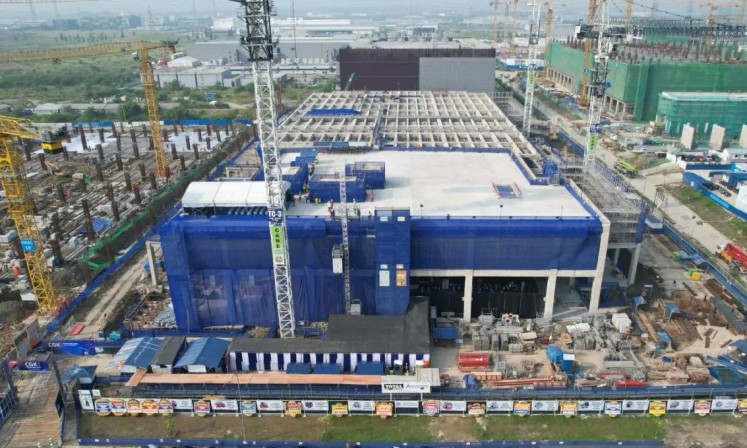
Indonesia faces a dilemma in managing its data center infrastructure, with over 60% of data centers concentrated in just two locations: Greater Jakarta and Batam. This concentration has led to delays, protests, and strained local resources. A major data center project in Jatiluhur, West Java, was halted just a week after its groundbreaking due to concerns over water consumption.
Similarly, in Batam, where the region's limited rain-fed water supply is under pressure from the expansion of data centers, local communities have protested, leading authorities to mandate the development of independent seawater desalination facilities.
The global challenge of data center expansion is evident, with the United States seeing 120 projects delayed or blocked in 2026 due to concerns over electricity and water use, noise pollution, and limited domestic value added. In Malaysia, a rapid data center expansion has raised concerns over resource strain and limited domestic value creation, leading to a mandate for a 30% local-content requirement and a stop to approving applications for water-intensive data centers.
Indonesia plans to add 1.3 GW of data center capacity and another 395 MW under construction to its existing 356 MW operational capacity. To address the issue, Indonesia needs to carefully plan where data centers can be located, avoiding concentration in areas where resources compete with existing users. Different types of data centers have varying requirements, and authorities should assess local resource and infrastructure capacity before approving projects.
Greater Jakarta could focus on latency-sensitive AI inference and cloud services due to its proximity to users, while Batam could retain its role as a regional cloud gateway within the Singapore-Johor-Batam corridor. Power-intensive AI training loads could be directed towards future power-rich areas that meet specific criteria, such as reliable electricity, high-capacity fiber, sustainable cooling solutions, and a distance from residential areas.
Indonesia's renewable energy potential, such as geothermal and solar, could also provide options in some locations. Location planning should be accompanied by appropriate policy, with policies tailored to the differences in local resource and infrastructure capacity.
Written by urgent.news from The Jakarta Post's reporting — not their text. Machine-written — may contain errors; check the original before relying on it.