Com fiscal frágil e populismo avançando, a França está com cara de Grécia
A França, mais uma vez, parece prestes a explodir. A sete meses de uma eleição que pode enterrar o Governo Emmanuel Macron e dar vitória à direitista Marine Le Pen, o país enfrenta uma disparada dos juros da sua dívida pública, enquanto milhares de estudantes protestam contra a decadência do ensino público.
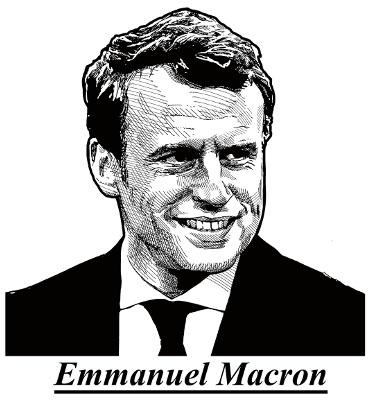
France, once again, appears poised for an explosion. Seven months from an election that could bring down Emmanuel Macron's government and give victory to far-right Marine Le Pen, the country is grappling with soaring interest rates on its public debt, as thousands of students protest against the decay of public education. As President since 2017, Macron implemented reforms to attract private investments and increase flexibility in labor rules.
However, while the GDP growth remains sluggish, public debt continues to rise, now nearing 120% of GDP. The combination of election uncertainty and fiscal fragility has spooked interest rates on public debt. In a global spread opening cycle, the most vulnerable countries are harshly punished, and this time, France is in a worse political and economic position than southern European countries.
10-year French bond yields have risen to 5%, the highest level since 2002 – higher than the yields paid today for Greek bonds, currently at 4.4%. The French Treasury holds over $1 trillion in debt maturing by 2030, and plans to sell a record volume of about $380 billion in bonds next year, according to the Wall Street Journal. "France has been a free rider in Europe for years, escaping its evident fiscal abuses with impunity," said a Carmignac manager, a major French asset manager.
"The strategy worked while no one noticed. Now, people are starting to notice." Macron, with his past as an investment banker and reformist speech, was a credibility anchor to some extent. Now, with the May election approaching and the growing probability of populists winning, international investors are distancing themselves from French bonds.
Both Le Pen and radical left Jean-Luc Mélenchon are publicly pressing for the Bank of France and the European Central Bank to intervene to curb the rising interest rates. Mélenchon said that if elected, he will sue the French central bank president for betrayal. Economist Paul Krugman, a leading expert on international crises, said that France follows an unsustainable fiscal trajectory.
"Debt is already very high relative to GDP, and the French government continues to increase it, registering large budget deficits even in the absence of emergencies – such as wars, severe recessions, or pandemics – that would justify such deficits," Krugman commented in his Substack. "Moreover, France has an aging population. With all other conditions constant, public pension costs will grow much faster than revenues," Krugman summarized.
Krugman pointed out that France's retirement age of 62 is generous compared to countries like Denmark and the US, where the minimum retirement age is 67. Macron recently made a reform, gradually raising it to 64 – but opposition candidates now talk about reversing this new rule. Krugman argues that it is not necessary to be conservative to consider the early retirement system in France unsustainable, especially when you consider that the life expectancy of French people at age 65 is about 87 years – two years more than in the US.
Fiscal pressure resulting from this generous public pension system led to cuts in other areas of spending, notably education. "In practice, France is granting generous subsidies to older French people at the expense of everyone else," Krugman wrote. "No wonder there are mass student protests across the country." To calm investor anxiety, Le Pen's Rassemblement National (National Assembly) presented the general lines of its plan to tackle the fiscal imbalance this week, promising to cut €136 billion from the annual deficit and reduce public spending to less than 50% of GDP.
The proposals, still vague and focused on combating waste, did not convince. "Several measures lack a clearly defined basis or mechanism, or depend on legal changes and international agreements," said ING in a report. Le Pen hopes that rationalizing the public machine will generate €28 billion from 2027, but ING says that closing public bodies, reorganizing departments, and reducing personnel demand time and involve transition costs.
A complicated proposal would be to continue reducing France's contribution to the EU budget – but that cannot be decided unilaterally. "Adjusting the EU resource system would require unanimous agreement and ratification by all member states," the Dutch bank said. According to Goldman Sachs, its proprietary election research model puts Le Pen as the favorite to win the presidential election, and points to the Rassemblement National with chances to capture the parliamentary majority.
Regarding the proposals, Goldman said that the timeline and details of the adjustment would face significant implementation challenges – and questioned the viability of various initiatives presented. "They do not take into account various lessons extracted from previous experiences in drawing up fiscal rules," the bank said.
Written by urgent.news from Brazil Journal's reporting — not their text. Machine-written — may contain errors; check the original before relying on it.
This story
This is one outlet's version. Read the fullest account.