Closing the gaps in early childhood eye care
India already has an extensive network of frontline health workers, immunisation services, school health programmes and primary and tertiary healthcare facilities. The challenge now is to connect these pieces. The goal should be to build a system in which every interaction a child has with a health worker becomes an opportunity to protect vision
The World Health Organization (WHO) estimates that there are approximately 19 million visually impaired children worldwide, with 1.4 million being blind. In India, approximately 3 lakh children are blind. However, nearly half of these cases are entirely preventable or treatable if detected early. This month, global campaigns will highlight the need to protect child eye health, advocating for governments to prioritize funding and access to care, including community screening camps and eye care in schools.
Despite these initiatives, clinicians on the frontlines face a critical challenge: many children with visual impairments are missed by healthcare systems despite previous access.
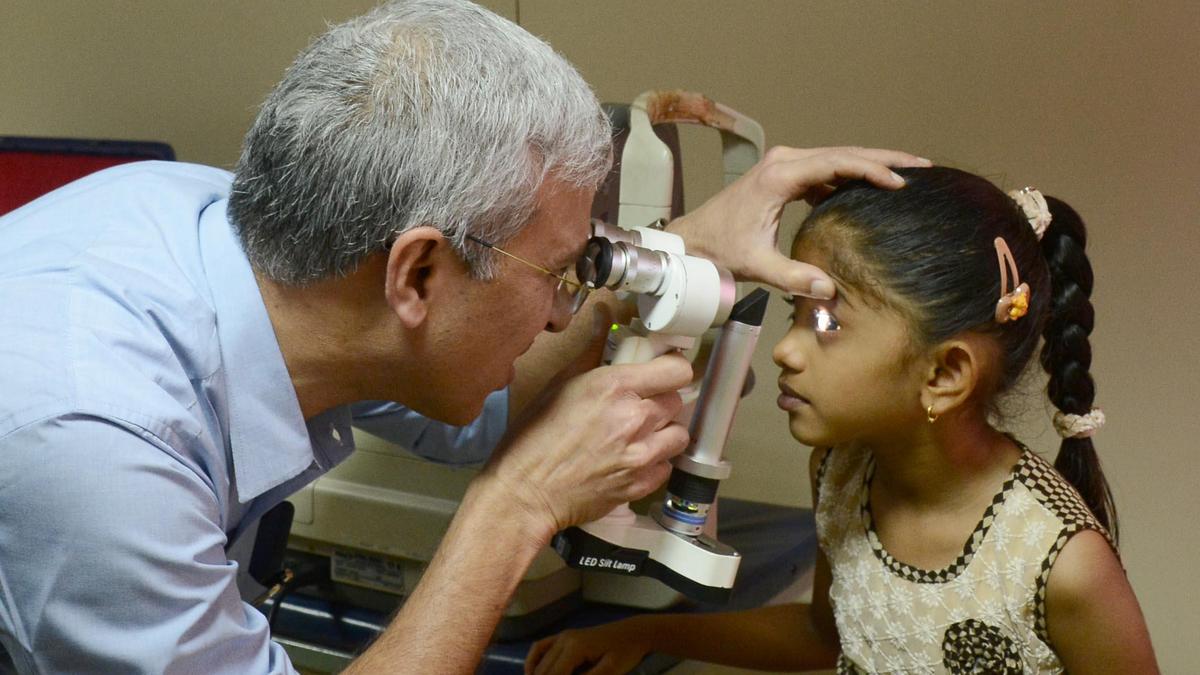
In a recent encounter at my clinic, a five-year-old twin named Anu was brought in by her parents. Upon examination, I discovered she had dense bilateral cataracts and nystagmus, indicating that her visual impairment began in infancy. Despite her mother's acknowledgment of her daughter's delays in reaching developmental milestones and noticing Anu's vision problems, they delayed seeking help for five years.
By this time, the chance to fully restore Anu's vision had passed. Anu had received vaccinations and visited health personnel seven times from birth to age five, yet her visual impairment remained undetected. This situation raises questions about the integration of vision screening with routine healthcare.
In India, the Rashtriya Bal Swasthya Karyakram (RBSK) aims to identify and manage health conditions in children from birth to 18 years. However, data on the number of children screened, ocular morbidity detected and treated in the 0–6 age category is not publicly available. According to the Karnataka Health & Family Welfare Department's Annual Report 2024, 62,45,424 children aged 6 to 16 years were screened in government and government-aided schools, but only 1.2 lakh received spectacles, a distribution rate of just 1.9%.
This stark contrast to local studies indicating a higher prevalence of paediatric refractive errors suggests operational challenges, such as drop-outs in the referral system and supply chain delays.
A study assessing coverage gaps in child health screening under RBSK found that only 47.4% of children with detected health problems received further care, highlighting a significant treatment gap. Even with detection, the path from identification to treatment can be fraught with issues. Field evaluations in Tumkur district revealed challenges in managing younger children and follow-up care, including parental non-cooperation, logistical barriers, and potential training gaps among screening teams.
My colleagues in Tumkur district reported lacking training to detect eye diseases in children, often referring patients to a paediatrician who visited the taluk hospital once a week.
The solution does not require a new system; it demands better utilization of existing resources. Implementing a simple red reflex test using direct ophthalmoscopes is one example. This 30-second test can identify major sight-threatening conditions such as cataracts, retinoblastoma, and high refractive errors without requiring verbal cooperation from the child.
It is essential to train RBSK mobile health teams, primary health centre nurses, and paediatric residents to perform this test, making it as routine as measuring a child's weight. Incorporating this check into the immunisation schedule ensures it is never overlooked.
Written by urgent.news from The Hindu Health's reporting — not their text. Machine-written — may contain errors; check the original before relying on it.
Also reported by 1 other outlet
- Closing the gaps in early childhood eye care thehindu.com