Breaking the classroom silence in China — Norhafiza Roslan
OCTOBER 8 — Teaching in an international environment provides educators with meaningful opportunities to learn and...
On October 8, teaching in an international setting allows educators to grow alongside their students. At Universiti Malaya's Centre for Foundation Studies in Science, which has a learning centre in China, my role involves teaching chemistry while guiding students through a shift from passive learning to an active English-language university environment.
My students previously experienced a rigid, passive study culture in their high school education, with teachers delivering one-way instruction and students listening passively. In the new English-taught foundation programme, students initially struggled with the language barrier, relying heavily on live translation apps during class.
The traditional chalkboard setup they were accustomed to encouraged them to hesitate in asking questions due to fear of making mistakes or struggling with English vocabulary. Furthermore, the widespread use of generative AI tools for assignments, lab reports, and tutorial exercises prevented students from developing problem-solving skills and hindered genuine English communication practice.
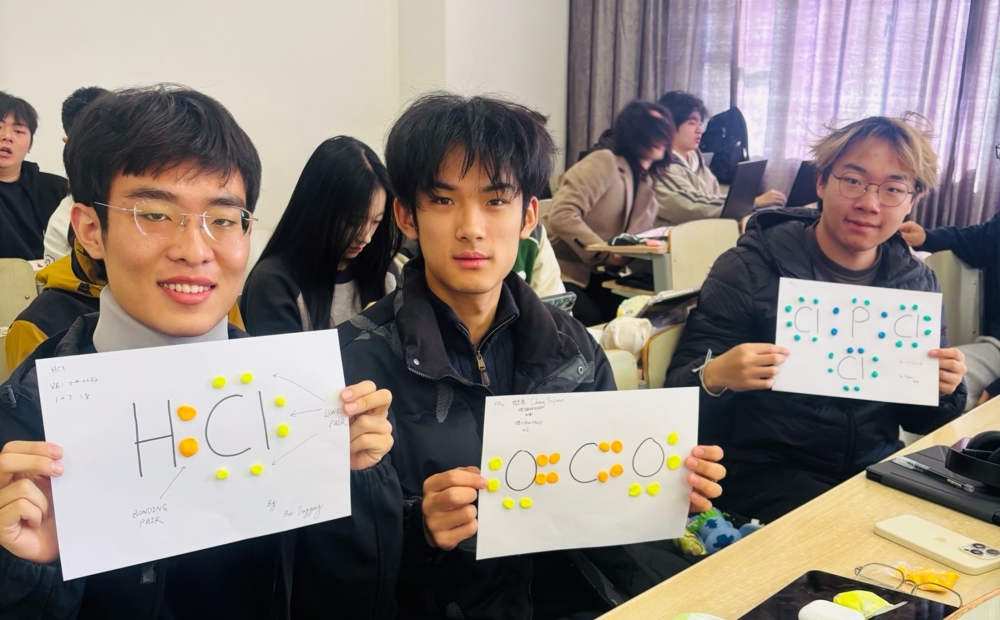
To tackle these challenges, I redesigned the classroom environment to be active, physical, and collaborative. By using hands-on activities like tactile model-building with clay and stick sets, I helped students grasp abstract chemistry topics without relying on static diagrams or AI explanations. Students physically constructed structural models and then presented their work in simple English, thereby deepening their scientific understanding and improving their English-speaking confidence.
To encourage the use of digital tools for productive learning, I incorporated real-time online game platforms for formative assessments during tutorial sessions. By transforming routine problem sets into live interactive competitions, students engaged in healthy peer rivalry that generated excitement without the possibility of relying on AI tools or translation apps.
The combination of hands-on activities and interactive games led to clear progress in both learning and student confidence. Students reported that these methods made difficult chemistry concepts easier to understand and remember, gradually reducing their dependence on translation apps and AI tools. While technology and AI have a permanent place in modern education, educators can leverage real-time problem-solving, tactile learning, and genuine human interaction to help students step away from automated answers and master complex scientific concepts.
Rewritten by urgent.news; may contain errors — check the original.
Source: malaymail.com