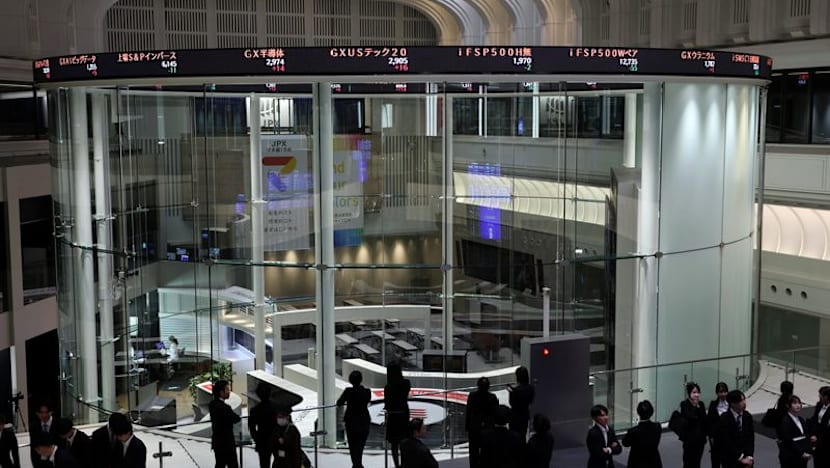
Asia shares subdued, bonds swamped by AI debt wave
SYDNEY: Asian shares slipped on Thursday as strains in sovereign bond markets were aggravated by reports some major tech companies were seeking to raise billions in debt in direct competition for limited funding.
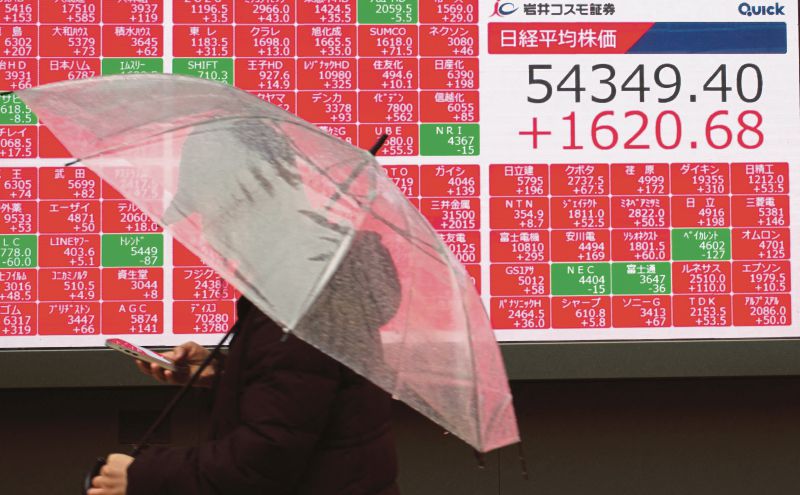
Asian stocks experienced a decline on Thursday as concerns grew over sovereign bond markets, fueled by reports of major tech companies attempting to raise billions in debt. This competition for limited funding exacerbated existing strains in the bond markets. The situation was further complicated by a surge in oil prices, which put additional pressure on government bonds, although a strong auction of US 10-year debt managed to keep yields from reaching their 24-year highs.
The strong dollar, driven by lofty yields, undermined the euro, which plunged to near 17-month lows as doubts about the financial health of France spread to Italy and Greece. This situation caused equities to become defensive, with Japan's Nikkei falling 0.9 percent and South Korea down 0.6 percent.
MSCI's Asia-Pacific index outside Japan slipped 0.1 percent, while Wall Street's S&P 500 and Nasdaq futures remained virtually unchanged. In Europe, EUROSTOXX 50, DAX, and FTSE futures showed a marginal increase of 0.1 percent after falling on Wednesday.
Reports emerged that SpaceX, Broadcom, and Oracle were seeking funding to acquire AI chips. Broadcom aimed to raise US$50 billion, SpaceX planned to issue US$30 billion in investment-grade debt and secure US$10 billion in loans for chips from Nvidia, a significant shareholder in SpaceX. This development led to a record high in credit default insurance premiums for SpaceX, causing its shares and bonds to drop.
Nigel Green, CEO of deVere Group, cautioned about a dangerous cycle where Nvidia was funding its customers' purchases of AI chips, potentially leaving global investors vulnerable if projected profits did not materialize. Green noted that AI development initially relied on cash, but it is increasingly being financed through debt, which alters the risk profile dramatically.
He emphasized that this debt must be repaid on schedule, regardless of revenue stability, and it is now affecting bond funds and pension accounts worldwide.
While there may be potential benefits for the semiconductor and memory sectors due to the AI build-out, the surge in corporate debt coincides with pressures on sovereign bond markets caused by inflation fears, widening budget deficits, and increasing cash rates. Federal Reserve minutes released on Wednesday indicated that most members expected another rate hike by the end of the year, though further adjustments would be carefully considered at each meeting.
Markets currently rate a 19 percent chance of a rate increase this month but are pricing in an 80 percent likelihood of a hike in December.
Goldman Sachs analysts anticipate a second Fed hike in December but believe that the central bank may conclude that further rate hikes are unnecessary. This outlook helped keep 2-year Treasury yields at 4.78 percent, while 10-year yields rose to 5.298 percent, up from a record high of 5.326 percent the previous day. The French financial situation, marked by strains in the bond market, prompted Bank of France head Emmanuel Moulin to acknowledge the country's economic challenges but reassure investors that assistance from the European Central Bank is not required.
The euro's decline to US$1.1198, dropping 0.6 percent overnight, was seen as significant, with a break below the recent low of US$1.1161 potentially triggering a further decline to US$1.1065. The dollar benefited from the euro's weakness, reaching a 18-month peak at 102.22, down 0.1 percent against the yen at 157.90, where it was protected by the possibility of intervention.
Commodity prices also saw fluctuations, with Brent crude futures increasing 0.9 percent to US$101.14 a barrel and US crude futures climbing 0.8 percent to US$89.02 a barrel. Gold, which had been under pressure as yields rose, settled at US$4,105 an ounce, nearing two-month lows.
Written by urgent.news from New Straits Times's reporting — not their text. Machine-written — may contain errors; check the original before relying on it.
This story
This is one outlet's version. Read the fullest account.
- Asia shares subdued, bonds swamped by AI debt wave channelnewsasia.com
- Asia shares subdued, bonds swamped by AI debt wave investing.com